NEWSNeuroscience
Why Are 3,800 Human Brains Stored in Montreal?
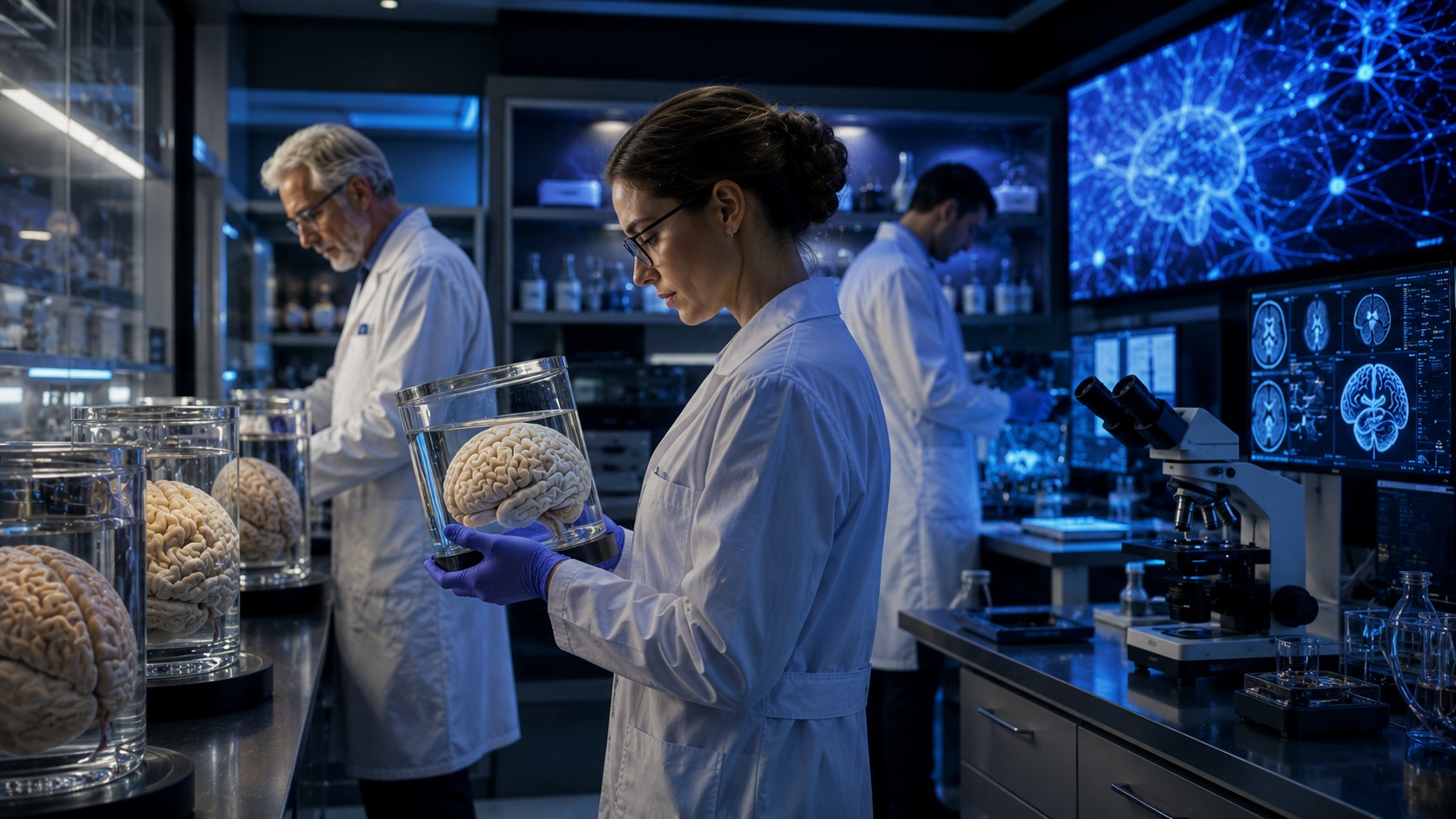
Inside a Montreal lab, a brain bank of more than 3,800 donated brains is helping researchers unlock the mysteries of Alzheimer's, Parkinson's, MS, epilepsy and depression.
Brain Geek News DeskJune 16, 2026Source: Montreal brain bank — neuroscience research
Hidden behind laboratory doors in Montreal is an extraordinary scientific resource: a brain bank containing more than 3,800 preserved human brains. While it may sound like science fiction, these donated specimens are helping researchers unlock the mysteries of neurological and psychiatric diseases.
Brain banks allow scientists to study the microscopic changes associated with conditions such as Alzheimer's disease, Parkinson's disease, multiple sclerosis, epilepsy, and depression. By comparing healthy and affected tissue, researchers can better understand how these disorders develop and identify potential targets for future treatments.
Importantly, every brain in the collection was donated voluntarily, often by individuals or families who wanted to contribute to medical research after death. These donations have become an invaluable resource for advancing neuroscience and improving care for future generations.
Brain Geek Take
Some of the biggest breakthroughs in neuroscience don't happen in high-tech scanners — they happen under the microscope. Brain donation programs provide researchers with irreplaceable insights that cannot be obtained through imaging alone, accelerating our understanding of how the human brain works and how diseases affect it.
➡️ Related reading: The Complete Guide to the Human Brain to explore brain anatomy, neurons, and the science behind neurological research.
Suggested Reading
- Recommended neuroscience book — View on Amazon
- Recommended brain anatomy resource — View on Amazon
- Recommended brain research book — View on Amazon
Brain BankNeuroscienceResearchNeurology
More Brain News
All news →
NEWSMind & Psychology
July 7, 2026
Helping a Waiter Clear the Table May Reveal More Than Simple Politeness
That instinctive gesture at the end of a restaurant meal can reflect empathy, cooperation and awareness of another person's effort — but psychologists caution against reading a whole personality from a single act.
Read News

NEWSLearning & Memory
July 7, 2026
Learning Another Language Could Make Your Brain More Efficient
Managing two languages forces the brain to constantly select relevant words and suppress competing ones — a subtle daily workout for cognitive control and information processing.
Read News

NEWSMind & Psychology
July 7, 2026
Why Can We Write Things We Could Never Say Out Loud?
Writing removes immediate social pressure, giving the brain more time to organize thoughts, regulate emotions and turn difficult internal experiences into language.
Read News