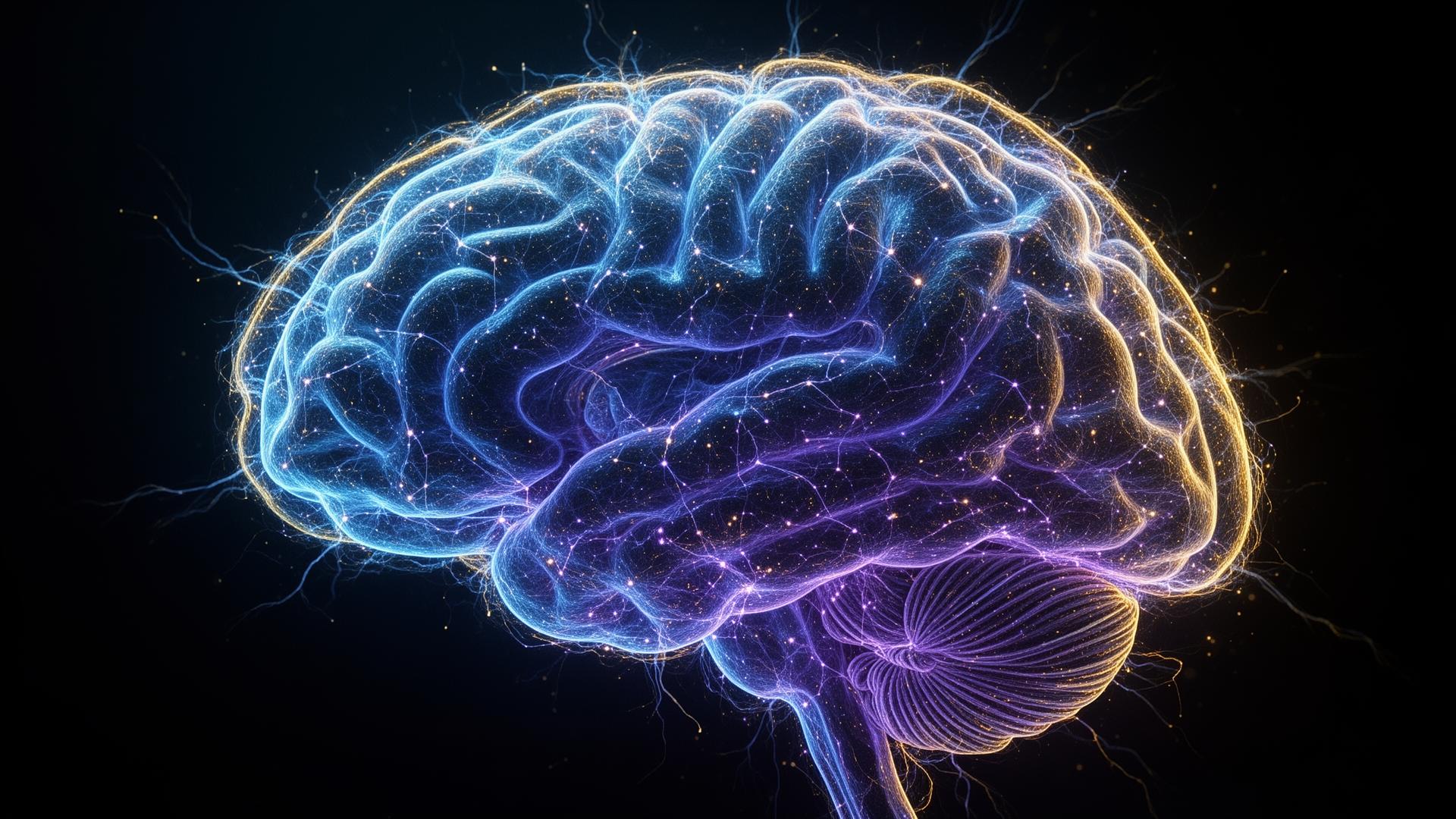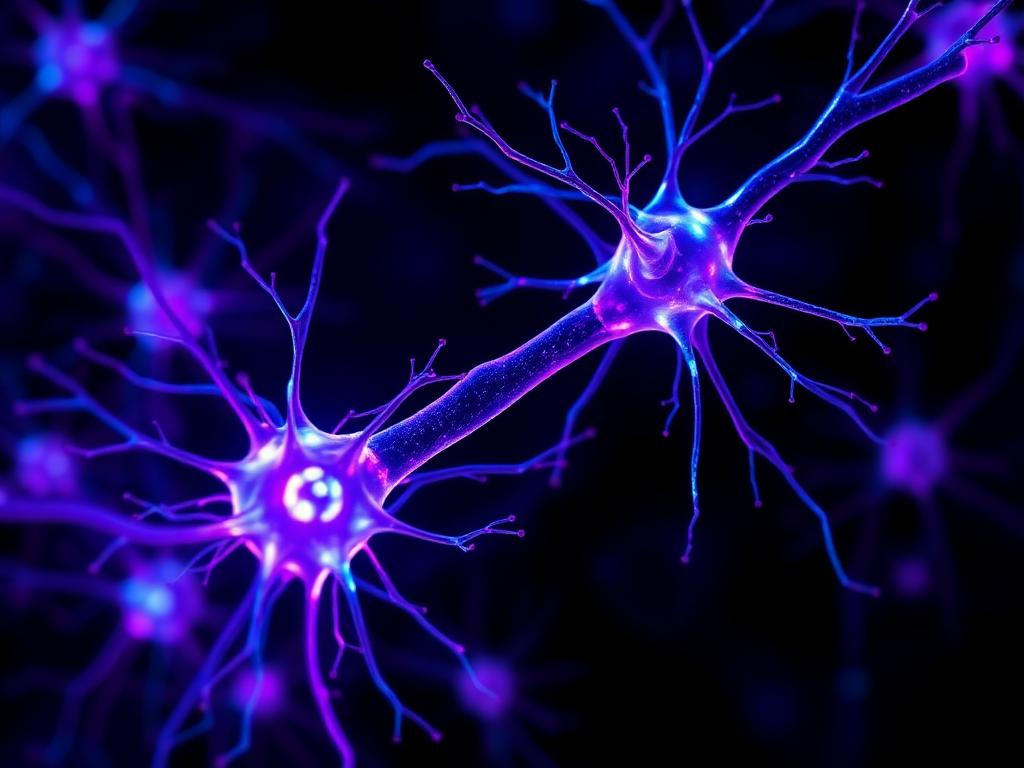
Neuroscience is the study of how roughly 86 billion neurons, glued together by an even larger number of glial cells and bathed in a precise chemical cocktail, generate everything you experience — perception, memory, language, emotion, the sense of self. At Brain Geek, Neuroscience is the foundational Brain Topic: the hub where we explain the biology underneath every other section of the site, from Learning & Memory to Sleep & Recovery.
What modern neuroscience actually studies
The field spans an enormous range of scales. At the molecular level, neuroscientists ask how neurotransmitters like dopamine, serotonin, glutamate and GABA shape signaling at the synapse — a story we unpack in The Complete Guide to Dopamine. At the circuit level, researchers map how networks like the prefrontal cortex, the hippocampus and the default mode network coordinate behavior. At the systems level, brain imaging reveals how attention, memory and decision-making emerge from the cooperation of dozens of regions.
From neurons to behavior
The central insight of modern neuroscience is that nothing about the mind is fixed. Neurons grow new connections in response to learning, prune unused ones during sleep, and strengthen pathways that get used — a property we call neuroplasticity. Our pillar essay Neuroplasticity Explained walks through the mechanisms — long-term potentiation, myelination, structural remodeling — that make every experience a small act of self-construction.
Why neuroscience matters for everyday life
Understanding the brain is not an academic luxury. The same circuits that allowed early humans to track prey on the savanna are the ones that now scroll an infinite feed, sit through video calls and learn a new language at 45. Knowing how those circuits work changes what you do with them. If you understand dopamine's role in motivation, you stop chasing it through cheap stimulation. If you understand how the hippocampus consolidates memories during deep sleep, you stop treating sleep as optional. If you understand the predictive nature of perception, you become more humble about your own opinions.
Key concepts to know
Neurons, synapses and neurotransmitters
Every thought is, in physical terms, a pattern of electrical and chemical signals racing across networks of neurons. Synapses are the meeting points where one neuron releases neurotransmitters that excite or inhibit the next. Drugs, food, stress and meditation all ultimately work by changing the activity of these tiny chemical conversations.
Neuroplasticity
The brain is not a fixed organ; it is a constantly reorganizing network. This is what makes recovery from injury possible, what makes learning a musical instrument at any age possible, and what makes habits both powerful and breakable. See our deep dive on how neuroplasticity works.
Networks, not modules
Older diagrams labelled regions as "the memory area" or "the language area." We now know the brain operates as overlapping networks — the executive control network for focus, the default mode network for inward thought, the salience network for switching between them. Cognitive performance is largely about the health of these networks.
Continue with Brain Geek
If you want a guided tour, start with our Complete Guide to the Human Brain and then explore Great Brains — biographies of figures like Isaac Newton and Albert Einstein told through what we now understand about cognition. To map your own cognition, try the Cognitive Profile and Brain Anatomy Explorer tools.