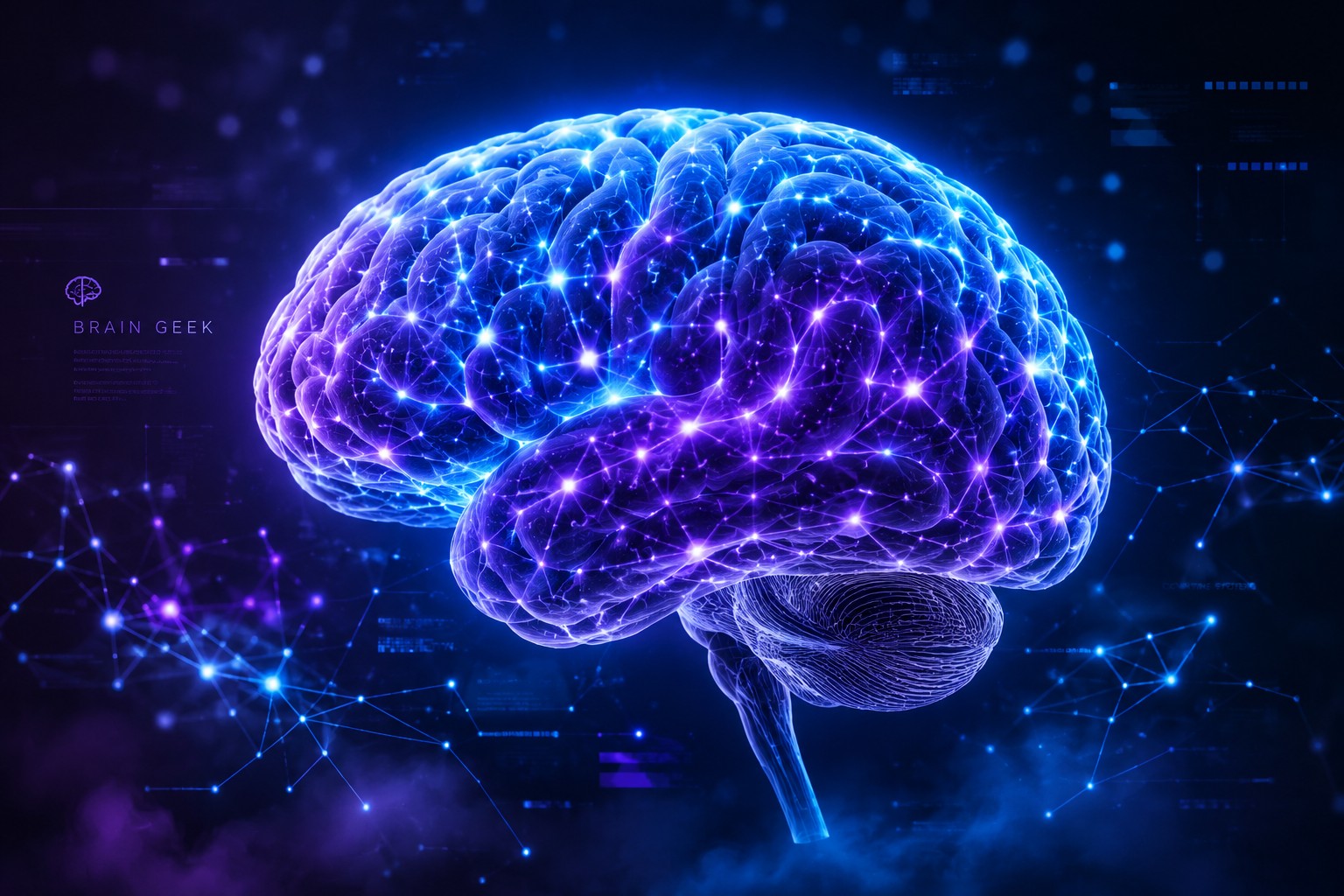
The Complete Guide to the Human Brain
How Your Brain Shapes Every Part of Your Life.
Introduction
Your brain is the most extraordinary object you will ever own.
It weighs just over three pounds, consumes around 20% of your body's energy, and contains roughly 86 billion neurons connected through trillions of synapses. Every thought you have ever had, every memory you have ever formed, every dream you have ever dreamed, and every decision you have ever made originated inside this remarkable organ.
Yet most people know surprisingly little about how their brain actually works.
We spend years learning mathematics, history, languages, and science, but almost no time learning how the very system that enables learning operates. This is unfortunate, because understanding your brain is one of the highest-return investments you can make.
Why? Because your brain influences virtually every aspect of your life:
- Your ability to learn new skills
- Your memory
- Your concentration
- Your productivity
- Your emotional well-being
- Your creativity
- Your sleep quality
- Your decision-making
- Your long-term health
The better you understand your brain, the better equipped you become to improve your life.
In this guide, you'll discover:
- What the human brain is
- How its major structures work
- How neurons communicate
- Why neurotransmitters matter
- How your brain evolved
- What neuroscience reveals about human behavior
- Practical ways to protect and improve brain performance
This guide serves as the central hub for Brain Geek's neuroscience content and connects to many specialized articles throughout the site.
Test Your Brain Before You Continue
Before learning about your brain, why not measure where you currently stand?
What Is the Human Brain?
The brain is the command center of the human nervous system.
It receives information from your senses, processes that information, stores memories, generates emotions, controls movement, regulates internal functions, and allows you to think about the future. Every second of every day, your brain performs an astonishing number of tasks. Even while you're sleeping, your brain remains highly active — it regulates breathing, controls heart rate, consolidates memories, processes emotions, and maintains countless biological functions necessary for survival.
The human brain evolved over hundreds of millions of years and remains one of the greatest mysteries in science. While neuroscience has made tremendous progress, researchers are still discovering new details about how the brain works. One reason for this complexity is the incredible number of connections inside the brain. Each neuron may connect to thousands of others. Together they form networks of staggering complexity — some neuroscientists estimate that the number of possible neural connections exceeds the number of stars in the observable universe.
Why Understanding Your Brain Matters
Many people think neuroscience is only useful for doctors or scientists. Nothing could be further from the truth. Understanding your brain can help you:
Learn More Efficiently
Knowing how memory works allows you to study smarter instead of longer.
Improve Concentration
Understanding attention helps you reduce distractions and increase focus.
Sleep Better
Knowing how the brain recovers during sleep can dramatically improve your energy levels.
Make Better Decisions
Understanding cognitive biases helps you avoid mental traps.
👉Cognitive Biases That Influence Your Decisions
Increase Productivity
A deeper understanding of motivation, dopamine, and habit formation can help you accomplish more with less effort.
The Three Major Parts of the Brain
Although the brain contains many specialized regions, it can be broadly divided into three major components.
1. The Cerebrum
The cerebrum is the largest part of the brain, representing approximately 85% of total brain mass. When people imagine a brain, they are usually thinking about the cerebrum. It is responsible for conscious thought, language, reasoning, planning, creativity, problem-solving, voluntary movement and memory.
The outer layer of the cerebrum is called the cerebral cortex. Its folded appearance allows a large amount of neural tissue to fit inside the skull. If the cerebral cortex were unfolded and flattened, it would cover a surprisingly large surface area.
The Four Lobes of the Cerebral Cortex
The frontal lobe is often called the brain's executive center — decision-making, planning, self-control, personality and goal setting. The parietal lobe processes sensory information. The temporal lobe plays a major role in hearing, language and memory. The occipital lobe is primarily responsible for vision.
Interactive Brain Map
2. The Cerebellum
The cerebellum sits beneath the cerebrum. Although much smaller, it contains an enormous number of neurons. Traditionally associated with balance, coordination, motor learning and movement precision, recent research suggests it may also contribute to cognitive processing, learning, prediction and language. Without it, simple actions would become clumsy and difficult.
3. The Brainstem
The brainstem is one of the oldest parts of the brain from an evolutionary perspective. It connects the brain to the spinal cord and its primary role is survival — breathing, heart rate, blood pressure, body temperature, and sleep-wake cycles. Damage to the brainstem can be life-threatening because many of its functions are essential for survival.
Meet Your Brain Cells: Neurons
Neurons are the fundamental building blocks of the nervous system. Every thought, memory, emotion, and movement depends on these specialized cells. A typical neuron consists of dendrites that receive incoming information, a cell body that processes information, and an axon that carries signals to other neurons.
The Synapse
The synapse is the communication gap between neurons. The human brain contains trillions of synapses, and most learning occurs through changes in synaptic connections. This is one reason why learning physically changes the brain.
Neuroplasticity: Your Brain Is Not Fixed
One of the most important discoveries in modern neuroscience is neuroplasticity. For much of history, scientists believed the adult brain was largely fixed. We now know this is false.
Your brain changes constantly. Every time you learn a new skill, read a book, practice an instrument, learn a language, exercise, or form a habit — your brain physically changes. Neural pathways strengthen, connections form, and networks reorganize themselves.
It explains why people can learn throughout life, recover from injuries, develop expertise, and adapt to changing environments.
The Brain's Chemical Messengers
While neurons provide the hardware, neurotransmitters provide much of the software. Neurotransmitters are chemical messengers that allow neurons to communicate. Different neurotransmitters influence different aspects of behavior — understanding them is essential for understanding yourself.
Dopamine
Dopamine is heavily involved in motivation, reward anticipation, goal pursuit and learning.
👉The Complete Guide to Dopamine
Serotonin
Serotonin influences mood, emotional stability, well-being and social behavior.
Acetylcholine
Acetylcholine plays a crucial role in learning, memory and attention.
GABA
GABA is the brain's primary inhibitory neurotransmitter. Its functions include relaxation, stress regulation and sleep support.
How the Human Brain Evolved
The human brain did not appear overnight. It is the product of hundreds of millions of years of evolution. To better understand your brain, it helps to think of it not as a single structure, but as layers that evolved over time.
The Survival Brain
The oldest structures of the brain are responsible for basic survival — breathing, heartbeat, reflexes, fight-or-flight responses, and basic survival instincts. Without these systems, survival would be impossible.
The Emotional Brain
As animals evolved, more sophisticated emotional systems emerged. This collection of structures is often referred to as the limbic system. Key functions include emotions, motivation, reward, memory formation and social behavior. Important structures include the hippocampus, amygdala and hypothalamus.
The Thinking Brain
The cerebral cortex, especially the prefrontal cortex, represents one of the most advanced aspects of human cognition. This region allows us to plan for the future, solve complex problems, imagine possibilities, control impulses and develop long-term goals. In many ways, your daily life is a constant negotiation between emotional systems and rational systems.
👉Why Humans Make Irrational Decisions
The Brain and Memory
Memory is one of the most fascinating functions of the human brain. Without memory, learning would be impossible, relationships could not exist, and personal identity would disappear. Memory is not a single system — it is actually a collection of specialized systems working together.
Short-Term Memory
Short-term memory temporarily holds information — a phone number for a few seconds, directions, a conversation. Its capacity is surprisingly limited.
Working Memory
Working memory is often described as the brain's mental workspace. It allows you to solve problems, perform calculations, follow instructions and reason through complex situations. Working memory is strongly linked to academic and professional performance.
Long-Term Memory
Long-term memory stores information over extended periods. It includes:
- Episodic Memory — personal experiences (your first day at school, a memorable vacation).
- Semantic Memory — facts and knowledge (the capital of France, the laws of physics).
- Procedural Memory — skills and habits (riding a bicycle, playing piano, driving a car).
The Role of the Hippocampus
The hippocampus plays a crucial role in forming new memories. Without it, the ability to create new long-term memories becomes severely impaired. The hippocampus acts like a librarian, helping organize and store information.
Why We Forget
Forgetting is often beneficial. Your brain constantly filters information; if everything were remembered equally, important information would become harder to find. Common reasons for forgetting include lack of attention, interference from new information, poor sleep, stress and lack of review.
👉Why We Forget and How to Remember More
The Science of Attention
Modern life constantly competes for your attention. Social media, notifications, emails, advertising, entertainment. Your attention has become one of the most valuable resources in the digital age.
What Is Attention?
Attention is the process of selecting information for conscious processing. Every second, your senses receive enormous amounts of data, and your brain must decide what deserves attention and what should be ignored. Without attention, learning becomes impossible, memory formation becomes difficult, and productivity suffers.
The Attention System
Scientists often divide attention into several components:
- Selective Attention — focusing on one thing while ignoring others (a friend in a noisy restaurant).
- Sustained Attention — maintaining focus over time (studying for an exam).
- Divided Attention — attempting to handle multiple tasks (driving while talking).
The Myth of Multitasking
Most people do not multitask — they rapidly switch attention between tasks. This constant switching creates cognitive costs. Research consistently shows that multitasking reduces productivity, increases mistakes and increases mental fatigue.
👉The Hidden Cost of Multitasking
Why Attention Is Disappearing
Many modern technologies are designed to capture attention. They exploit brain systems associated with novelty, reward and curiosity. The result? Many people find it increasingly difficult to concentrate for long periods. Understanding attention is one of the most important skills of the 21st century.
👉Why Your Attention Span Is Shrinking
How Learning Changes the Brain
Every time you learn something new, your brain physically changes. Learning is not merely psychological — it is biological. This is one of the most exciting discoveries in neuroscience.
Synaptic Strengthening
When neurons communicate repeatedly, their connections become stronger. The phrase "neurons that fire together wire together" captures this concept beautifully.
Building Neural Networks
Experts differ from beginners largely because of their neural networks. The expert brain develops highly efficient pathways through practice. This explains why reading becomes easier, skills become automatic, and expertise develops over time.
Deliberate Practice
Not all practice is equal. The most effective form is deliberate practice — feedback, focus, repetition and gradual improvement.
👉The Science of Deliberate Practice
The Power of Spaced Repetition
One of the most powerful learning techniques ever studied is spaced repetition. Instead of cramming information once, you review it at increasing intervals. This strengthens memory and dramatically improves retention.
👉The Complete Guide to Spaced Repetition
Your Brain Is Constantly Rewiring Itself
Perhaps the most empowering idea in neuroscience: you are not finished. Your brain is not finished. Your abilities are not fixed. Through learning, habits, practice, exercise and experience, your brain continuously adapts. New skills can be learned, bad habits can be replaced, performance can improve, and cognitive abilities can develop.
Sleep: The Brain's Most Powerful Recovery Tool
If there is one habit that affects nearly every aspect of brain performance, it is sleep. Unfortunately, modern society often treats sleep as optional. Many people sacrifice sleep to work longer, study more, watch entertainment, or scroll social media. Ironically, this often produces the opposite of the desired effect.
Poor sleep reduces memory, attention, learning, creativity, emotional regulation and decision-making.
The brain does not simply "shut down" during sleep. In many ways, it becomes incredibly active.
Why Sleep Is Essential
During sleep, your brain performs critical maintenance:
- Memory consolidation — the brain strengthens important memories and discards irrelevant information.
- Emotional processing — sleep helps regulate emotional experiences. Poor sleep often makes people more irritable, anxious and reactive.
- Neural maintenance — the brain repairs and reorganizes neural connections.
- Waste removal — the glymphatic system helps remove metabolic waste from the brain during sleep.
Sleep Stages
Sleep is not a single state. It consists of light sleep (transition into sleep), deep sleep (physical restoration and recovery), and REM sleep (associated with dreaming, creativity and memory processing). A healthy night includes multiple cycles through these stages.
Exercise and the Brain
Many people think exercise is primarily about physical health. In reality, exercise is one of the most powerful brain-enhancement tools available. Regular physical activity has been linked to improvements in memory, learning, mood, attention, and long-term brain health.
How Exercise Improves Brain Function
Exercise increases blood flow to the brain — more oxygen, more nutrients, better support for neurons. It also stimulates the release of important growth factors. One of the most important is BDNF (Brain-Derived Neurotrophic Factor), sometimes called "the fertilizer of the brain." BDNF supports learning, memory and neuroplasticity.
👉Exercise and Cognitive Performance
Exercise and Mental Health
Research consistently shows that physical activity can help reduce stress, anxiety and symptoms of depression. Exercise influences many neurotransmitter systems — dopamine, serotonin, endorphins — which helps explain why movement often improves mood.
Nutrition and Brain Performance
The brain is one of the most energy-demanding organs in the body. Everything you eat eventually influences brain function. While no food can magically transform intelligence, nutrition plays a significant role in cognitive performance, mood, energy levels and long-term brain health.
Nutrients Important for Brain Health
- Omega-3 fatty acids — found in fatty fish, certain algae and some supplements; important components of brain cell membranes.
- Protein — provides amino acids used to create neurotransmitters.
- Antioxidants — help protect cells from oxidative stress. Examples: blueberries, dark chocolate, colorful vegetables.
- Vitamins and minerals — magnesium, zinc, vitamin B12, vitamin D and many others.
👉Nutrition and Cognitive Performance
Brain Aging: Can You Protect Your Brain?
"Can I keep my brain healthy as I age?" The answer appears to be yes — at least to a significant degree. Although aging is inevitable, many lifestyle choices influence cognitive health.
Habits Associated with Better Brain Aging
- Regular exercise — one of the strongest protective factors.
- Lifelong learning — keeps neural circuits active.
- Quality sleep — essential for long-term cognitive health.
- Social interaction — strong relationships benefit brain health.
- Healthy nutrition — supports both brain structure and function.
Cognitive Reserve
Scientists use the term cognitive reserve to describe the brain's resilience. The more you challenge your brain throughout life — learning, reading, problem-solving, creativity — the stronger this reserve may become. Think of it as building savings for your future brain.
👉How to Build Cognitive Reserve
Common Brain Myths
Many misconceptions about the brain remain surprisingly widespread. Let's correct a few.
Myth #1: We Only Use 10% of Our Brain
False. Brain imaging clearly shows activity throughout the brain. Different regions become active at different times.
Myth #2: Adults Cannot Learn New Skills
False. Neuroplasticity continues throughout life. Adults can learn new languages, instruments and professions.
Myth #3: Intelligence Is Fixed
False. Although genetics matter, environment, learning, habits and effort all influence performance.
Myth #4: Multitasking Makes You More Productive
False. Most multitasking reduces efficiency. Task-switching creates cognitive costs.
Myth #5: Memory Works Like a Video Recorder
False. Memories are reconstructed each time they are recalled. This makes memory surprisingly flexible — and sometimes unreliable.
👉The Biggest Neuroscience Myths