NEWSNeuroscience
When Will Humanoid Robots Do Your Housework? Probably Not as Soon as You Think
Despite rapid progress in AI and robotics, fully autonomous household helpers remain years away — because human homes demand a level of adaptability that's hard to engineer.
Brain Geek News DeskJune 19, 2026Source: AI & robotics research
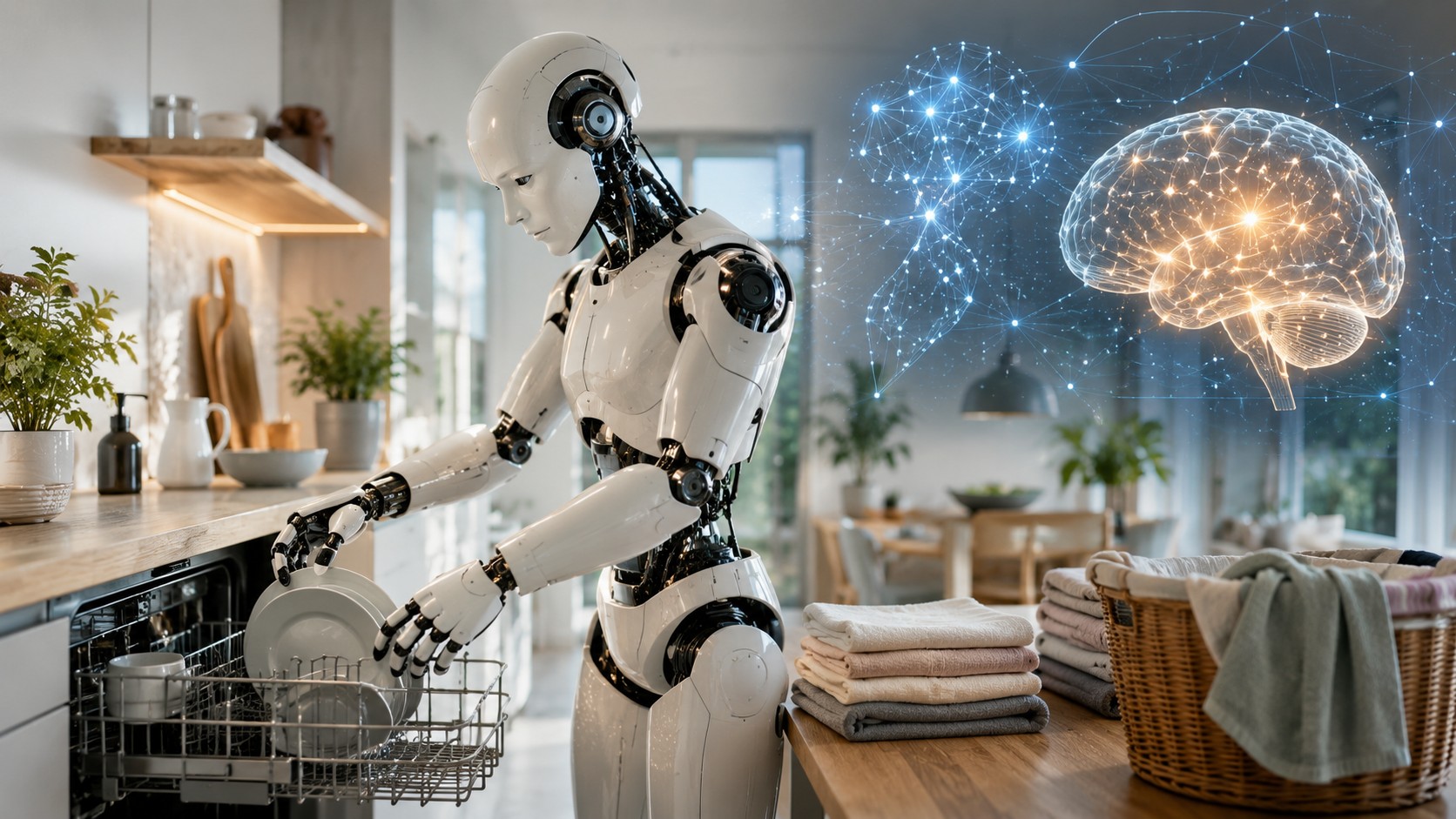
The idea of a humanoid robot folding laundry, washing dishes, or tidying your home has long been a staple of science fiction. Tech companies have made impressive progress in robotics and artificial intelligence, but experts say fully autonomous household helpers are still some way off.
The challenge isn't just intelligence — it's adaptability. Human homes are unpredictable environments filled with objects of different shapes, changing layouts, pets, children, and unexpected situations. Tasks that seem simple for people, such as loading a dishwasher or picking up toys, require an extraordinary combination of vision, motor control, planning, and decision-making.
Advances in AI and robotics are accelerating, and prototype humanoid robots are becoming increasingly capable. However, researchers believe that reliable, affordable home assistants able to perform a wide variety of chores without supervision will require further breakthroughs in both hardware and software.
Brain Geek Take
Ironically, what makes household chores difficult for robots is what the human brain does effortlessly every day. Our ability to recognize objects, adapt to new situations, and coordinate complex movements remains one of nature's greatest engineering achievements.
➡️ Related reading: The Complete Guide to the Human Brain and Neuroplasticity Explained on Brain Geek to discover how the brain enables flexible learning and real-world problem solving.
Suggested Reading
- Max Tegmark — Life 3.0 — View on Amazon
- Melanie Mitchell — Artificial Intelligence: A Guide for Thinking Humans — View on Amazon
- Peter McKinnon — Robotics: Everything You Need to Know About Robotics from Beginner to Expert — View on Amazon
RoboticsAICognitionNeuroscience
More Brain News
All news →
NEWSMind & Psychology
July 7, 2026
Helping a Waiter Clear the Table May Reveal More Than Simple Politeness
That instinctive gesture at the end of a restaurant meal can reflect empathy, cooperation and awareness of another person's effort — but psychologists caution against reading a whole personality from a single act.
Read News

NEWSLearning & Memory
July 7, 2026
Learning Another Language Could Make Your Brain More Efficient
Managing two languages forces the brain to constantly select relevant words and suppress competing ones — a subtle daily workout for cognitive control and information processing.
Read News

NEWSMind & Psychology
July 7, 2026
Why Can We Write Things We Could Never Say Out Loud?
Writing removes immediate social pressure, giving the brain more time to organize thoughts, regulate emotions and turn difficult internal experiences into language.
Read News