NEWSNeuroscience
A New AI Inspired by the Human Brain Could Improve Reasoning
Researchers at EPFL are designing large language models that mimic how the brain selectively activates neural circuits — making AI faster, more efficient and better at reasoning.
Brain Geek News DeskJune 30, 2026Source: EPFL — Swiss Federal Institute of Technology Lausanne
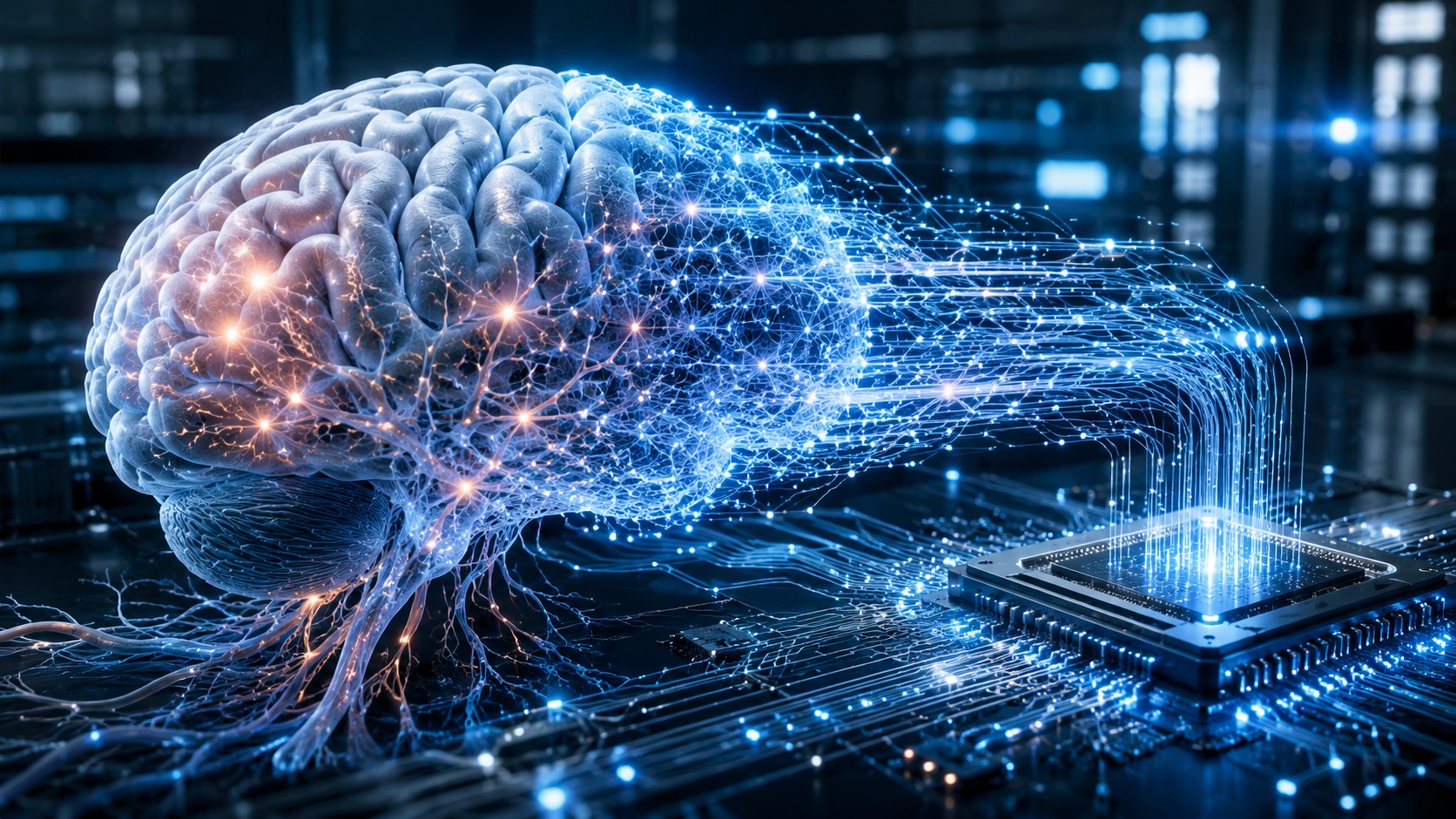
Researchers at the Swiss Federal Institute of Technology Lausanne (EPFL) are taking inspiration from the human brain to design a new generation of large language models (LLMs) that reason more efficiently.
Current AI models often rely on enormous computational power, processing vast amounts of information before producing an answer. The human brain, by contrast, solves complex problems while consuming remarkably little energy. It achieves this by activating only the neural circuits that are needed for a specific task.
The EPFL team is exploring AI architectures that mimic this selective activation. Instead of mobilizing every part of the model for every question, future systems could dynamically engage only the most relevant "neural" components. This approach could make AI faster, more energy-efficient, and better at logical reasoning.
The research is still in its early stages, but it reflects a growing trend in artificial intelligence: looking to neuroscience for inspiration. By studying how biological brains learn, adapt, and solve problems, engineers hope to build AI systems that are not only more powerful but also more efficient.
Brain Geek Take
Artificial intelligence has taught neuroscientists a lot — but the reverse is becoming increasingly true. The human brain remains the most efficient computing system ever discovered, and its architecture continues to inspire the next generation of intelligent machines.
➡️ Related reading: The Complete Guide to the Human Brain and Neuroplasticity Explained on Brain Geek to discover why the brain remains the ultimate model for intelligent systems.
Suggested Reading
- Jeff Hawkins — A Thousand Brains: A New Theory of Intelligence
- Max Bennett — A Brief History of Intelligence
- Melanie Mitchell — Artificial Intelligence: A Guide for Thinking Humans
Continue Exploring on Brain Geek
- The Complete Guide to the Human Brain
- The Complete Guide to Dopamine
- Neuroplasticity Explained
- Brain Geek Tools — interactive assessments for memory, focus, sleep and brain health.
- Subscribe to the Brain Geek Letter — weekly neuroscience insights in your inbox.
Artificial intelligenceNeuroscienceLLMsCognition
More Brain News
All news →
NEWSMind & Psychology
July 7, 2026
Helping a Waiter Clear the Table May Reveal More Than Simple Politeness
That instinctive gesture at the end of a restaurant meal can reflect empathy, cooperation and awareness of another person's effort — but psychologists caution against reading a whole personality from a single act.
Read News

NEWSLearning & Memory
July 7, 2026
Learning Another Language Could Make Your Brain More Efficient
Managing two languages forces the brain to constantly select relevant words and suppress competing ones — a subtle daily workout for cognitive control and information processing.
Read News

NEWSMind & Psychology
July 7, 2026
Why Can We Write Things We Could Never Say Out Loud?
Writing removes immediate social pressure, giving the brain more time to organize thoughts, regulate emotions and turn difficult internal experiences into language.
Read News