NEWSNeuroscience
Neither Alive nor Dead? How Isolated Human Brains Are Advancing Medical Research
Small samples of living human brain tissue — kept functional in the lab under strict ethical guidelines — are opening new windows into Alzheimer's, Parkinson's, epilepsy and brain tumors.
Brain Geek News DeskJuly 2, 2026Source: Neurosurgery and translational neuroscience
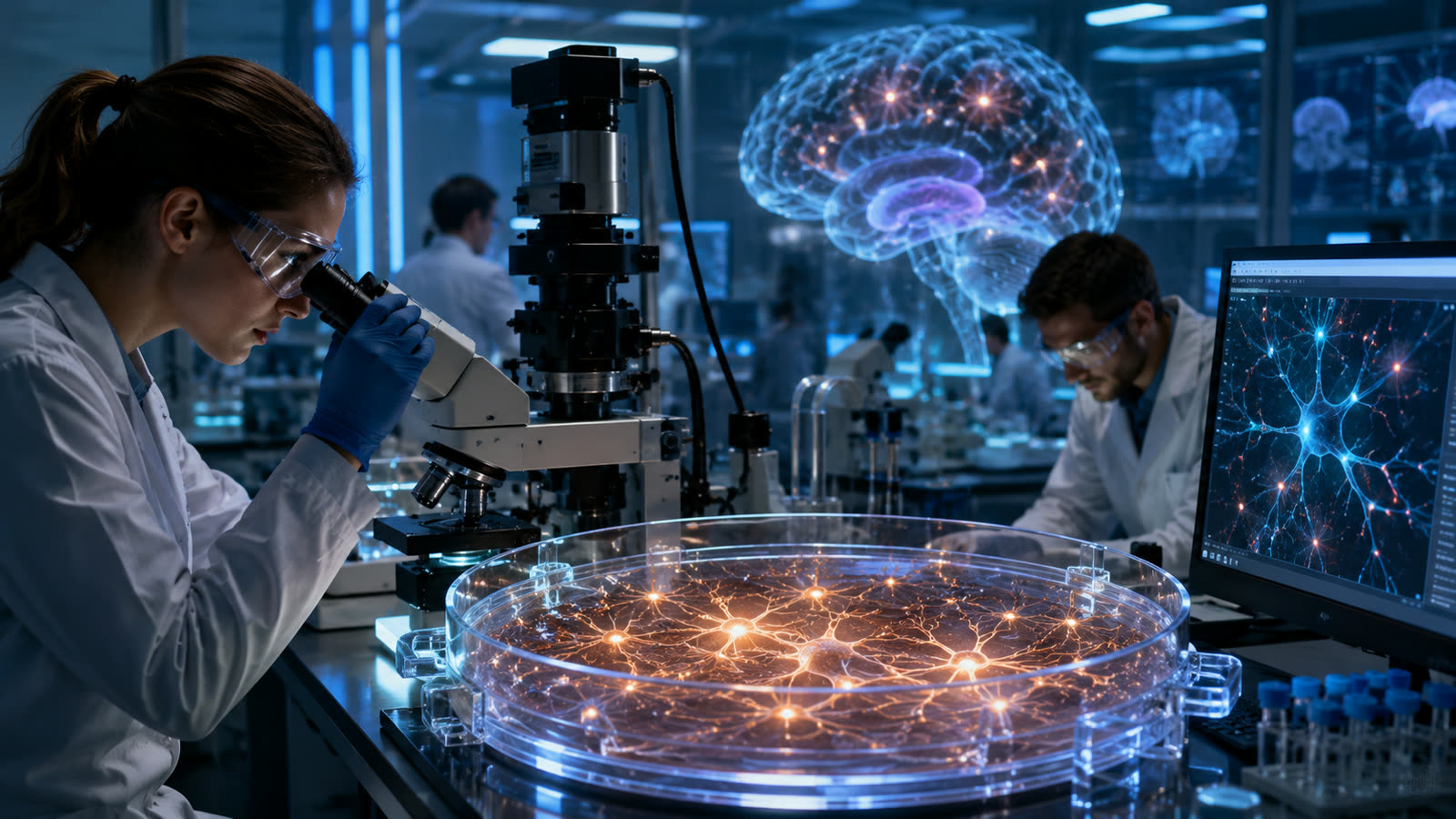
One of the most intriguing frontiers in neuroscience involves the study of human brain tissue kept alive outside the body. While this may sound like science fiction, researchers emphasize that these are not conscious brains and raise none of the scenarios often imagined in popular culture.
The tissue used in these studies usually comes from small samples removed during neurosurgery with the patient's informed consent. Scientists can keep these living cells functional for a limited time, allowing them to observe how human neurons communicate, respond to drugs, and develop neurological diseases.
This research offers a unique opportunity to study the human brain directly — something that animal models cannot always accurately reproduce. It may help scientists better understand conditions such as Alzheimer's disease, Parkinson's disease, epilepsy, and brain tumors, while also accelerating the development of new treatments.
The work is conducted under strict ethical guidelines. Researchers stress that these isolated tissues are not capable of consciousness, thoughts, memories, or perception. Their value lies in providing an unprecedented window into the biology of human neurons.
Brain Geek Take
Studying living human neurons outside the body may sound unsettling, but it represents one of the most powerful tools available for understanding neurological diseases. As long as ethical standards remain rigorous, this research could pave the way for therapies that were unimaginable only a few years ago.
➡️ Related reading: The Complete Guide to the Human Brain and Neuroplasticity Explained on Brain Geek to discover how neurons communicate, adapt, and respond to injury.
Suggested Reading
- David Eagleman — The Brain: The Story of You
- Rita Carter — The Human Brain Book
- Eric Kandel — In Search of Memory
Continue Exploring on Brain Geek
- The Complete Guide to the Human Brain
- The Complete Guide to Dopamine
- Neuroplasticity Explained
- Brain Geek Tools — interactive assessments for memory, focus, sleep and brain health.
- Subscribe to the Brain Geek Letter — weekly neuroscience insights in your inbox.
NeuroscienceMedical researchNeuronsEthics
More Brain News
All news →
NEWSMind & Psychology
July 7, 2026
Helping a Waiter Clear the Table May Reveal More Than Simple Politeness
That instinctive gesture at the end of a restaurant meal can reflect empathy, cooperation and awareness of another person's effort — but psychologists caution against reading a whole personality from a single act.
Read News

NEWSLearning & Memory
July 7, 2026
Learning Another Language Could Make Your Brain More Efficient
Managing two languages forces the brain to constantly select relevant words and suppress competing ones — a subtle daily workout for cognitive control and information processing.
Read News

NEWSMind & Psychology
July 7, 2026
Why Can We Write Things We Could Never Say Out Loud?
Writing removes immediate social pressure, giving the brain more time to organize thoughts, regulate emotions and turn difficult internal experiences into language.
Read News