NEWSNeuroscience
New Hope for ALS: Could Repair Proteins Help Protect Dying Neurons?
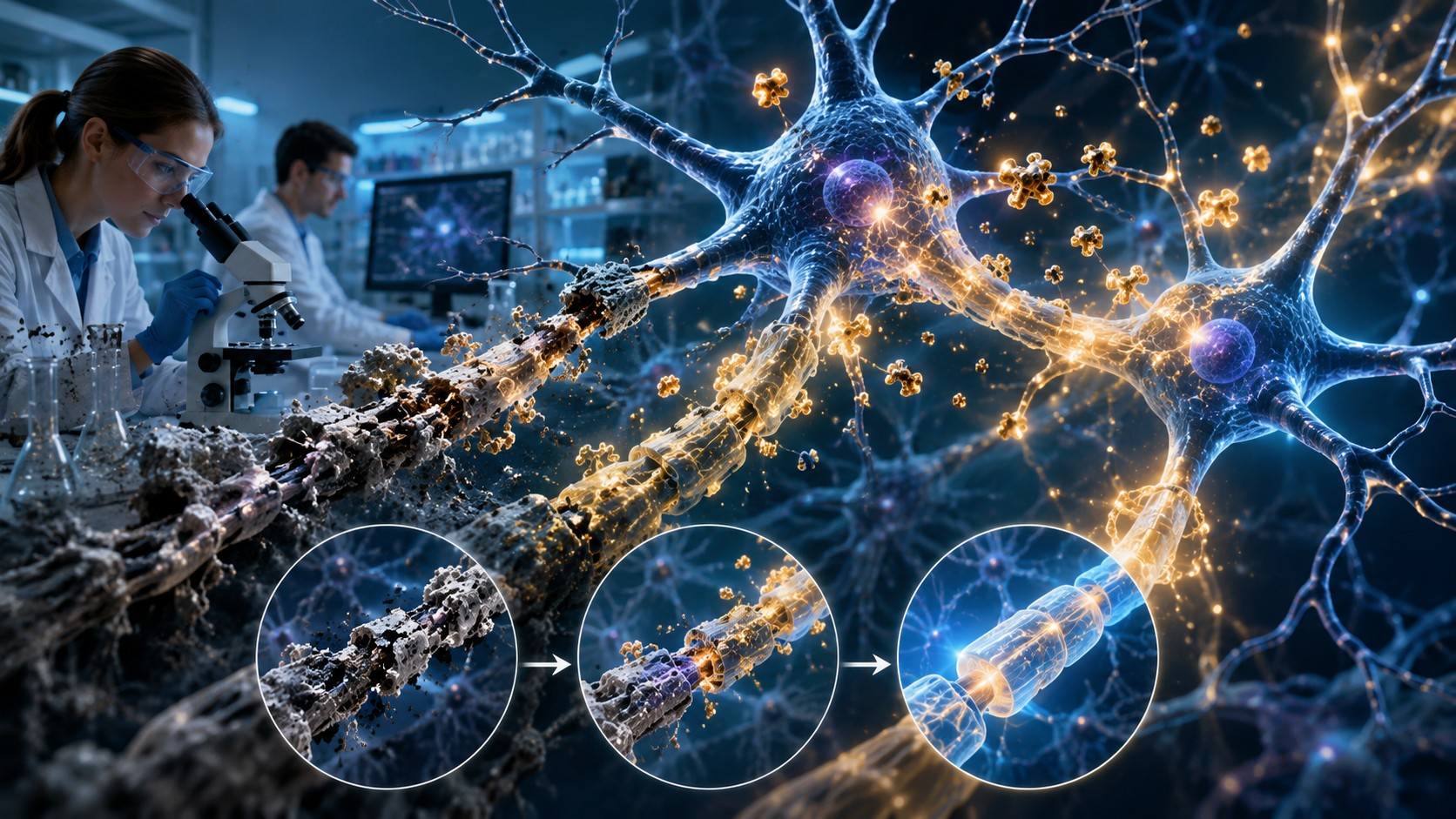
Researchers studying ALS — also known as Lou Gehrig's or Charcot disease — have identified repair proteins that may one day help slow the loss of motor neurons.
Brain Geek News DeskJune 25, 2026Source: ALS and neurodegeneration research
Researchers investigating Amyotrophic Lateral Sclerosis (ALS) — also known as Lou Gehrig's disease or Charcot disease in many countries — have identified a promising new avenue that could one day help slow the progression of this devastating neurological disorder.
Recent studies suggest that certain repair proteins may play a role in protecting damaged neurons or supporting their survival under stressful conditions. By enhancing the brain and spinal cord's natural repair mechanisms, scientists hope these molecules could reduce the loss of motor neurons that characterizes ALS.
ALS progressively destroys the nerve cells responsible for controlling voluntary muscles, leading to increasing weakness and, eventually, difficulties with speaking, swallowing, and breathing. Although several treatments can modestly slow disease progression or manage symptoms, there is currently no cure.
While the latest findings remain at the research stage and require further validation in clinical trials, they represent another encouraging step toward understanding the disease and developing more effective therapies.
Brain Geek Take
Breakthroughs in neuroscience rarely happen overnight. Each new discovery — whether a protein, gene, or cellular pathway — adds another piece to the puzzle and brings researchers closer to treatments that could change lives.
➡️ Related reading: The Complete Guide to the Human Brain and Neuroplasticity Explained on Brain Geek to explore how neurons function, adapt, and respond to injury.
Suggested Reading
- Lisa Genova — Every Note Played (a poignant novel about ALS)
- Isabella White — Neurodegenerative Diseases and the Brain
Continue Exploring on Brain Geek
- The Complete Guide to the Human Brain
- The Complete Guide to Dopamine
- Neuroplasticity Explained
- Brain Geek Tools — interactive assessments for memory, focus, sleep and brain health.
- Subscribe to the Brain Geek Letter — weekly neuroscience insights in your inbox.
ALSNeurodegenerationNeuronsResearch
More Brain News
All news →
NEWSMind & Psychology
July 7, 2026
Helping a Waiter Clear the Table May Reveal More Than Simple Politeness
That instinctive gesture at the end of a restaurant meal can reflect empathy, cooperation and awareness of another person's effort — but psychologists caution against reading a whole personality from a single act.
Read News

NEWSLearning & Memory
July 7, 2026
Learning Another Language Could Make Your Brain More Efficient
Managing two languages forces the brain to constantly select relevant words and suppress competing ones — a subtle daily workout for cognitive control and information processing.
Read News

NEWSMind & Psychology
July 7, 2026
Why Can We Write Things We Could Never Say Out Loud?
Writing removes immediate social pressure, giving the brain more time to organize thoughts, regulate emotions and turn difficult internal experiences into language.
Read News