NEWSNeuroscience
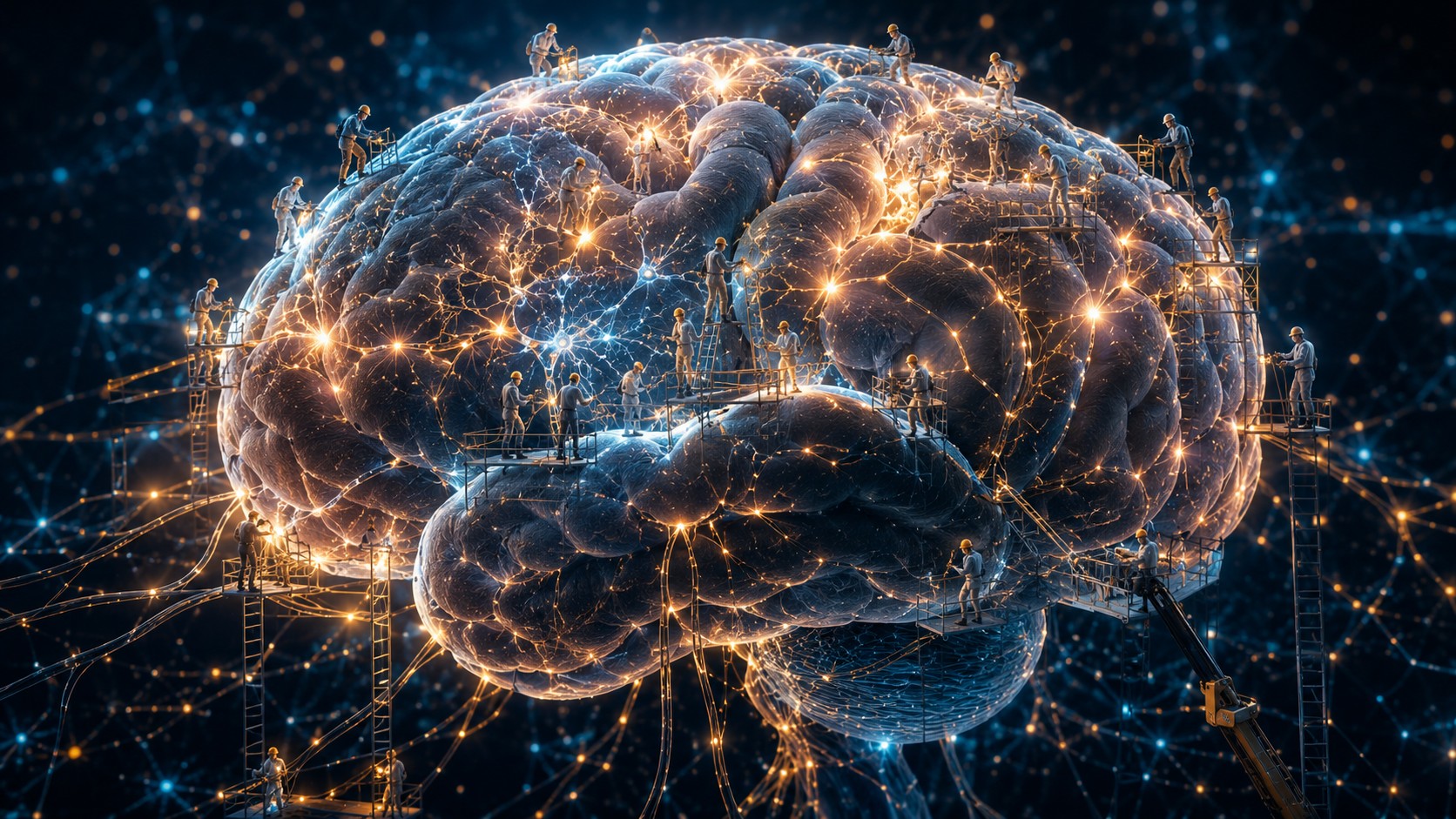
Your Brain Never Stops Changing
A recent feature highlights one of neuroscience's most important discoveries: the adult brain keeps adapting, reorganizing and reshaping itself long after childhood.
Brain Geek News DeskJuly 6, 2026Source: Courrier International / New Scientist
The human brain is not a fixed machine. It is a living organ that continues to transform throughout life.
A recent feature highlighted by Courrier International, based on a New Scientist cover story, focuses on one of the most fascinating discoveries in modern neuroscience: the brain keeps adapting, reorganizing, and reshaping itself — even in adulthood.
This capacity is known as neuroplasticity. Every time we learn a skill, form a habit, recover from an injury, or adapt to a new environment, the brain modifies its networks. Some connections become stronger, others weaken, and new patterns of activity emerge.
For a long time, scientists believed that brain development was mostly limited to childhood. Today, research shows that adult brains remain dynamic. Learning, exercise, sleep, social interaction, and mentally stimulating activities can all influence how the brain changes over time.
This does not mean the brain can do anything at any age without limits. Plasticity varies depending on age, health, genetics, and environment. But the central message is powerful: the brain remains more flexible than we once believed.
Brain Geek Take
Your brain is under construction every day. What you practice, repeat, consume, and experience helps shape the neural pathways you carry into the future. Neuroplasticity is not magic — it is biology responding to your life.
➡️ Related reading: Neuroplasticity Explained, The Complete Guide to the Human Brain, and The Complete Guide to Memory on Brain Geek to discover how learning, habits and experience reshape the brain.
Suggested Reading
- Norman Doidge — The Brain That Changes Itself
- David Eagleman — Livewired
- Lisa Feldman Barrett — Seven and a Half Lessons About the Brain
Continue Exploring on Brain Geek
- The Complete Guide to the Human Brain
- The Complete Guide to Dopamine
- Neuroplasticity Explained
- Brain Geek Tools — interactive assessments for memory, focus, sleep and brain health.
- Subscribe to the Brain Geek Letter — weekly neuroscience insights in your inbox.
NeuroplasticityNeuroscienceLearningBrain health
More Brain News
All news →
NEWSMind & Psychology
July 7, 2026
Helping a Waiter Clear the Table May Reveal More Than Simple Politeness
That instinctive gesture at the end of a restaurant meal can reflect empathy, cooperation and awareness of another person's effort — but psychologists caution against reading a whole personality from a single act.
Read News

NEWSLearning & Memory
July 7, 2026
Learning Another Language Could Make Your Brain More Efficient
Managing two languages forces the brain to constantly select relevant words and suppress competing ones — a subtle daily workout for cognitive control and information processing.
Read News

NEWSMind & Psychology
July 7, 2026
Why Can We Write Things We Could Never Say Out Loud?
Writing removes immediate social pressure, giving the brain more time to organize thoughts, regulate emotions and turn difficult internal experiences into language.
Read News