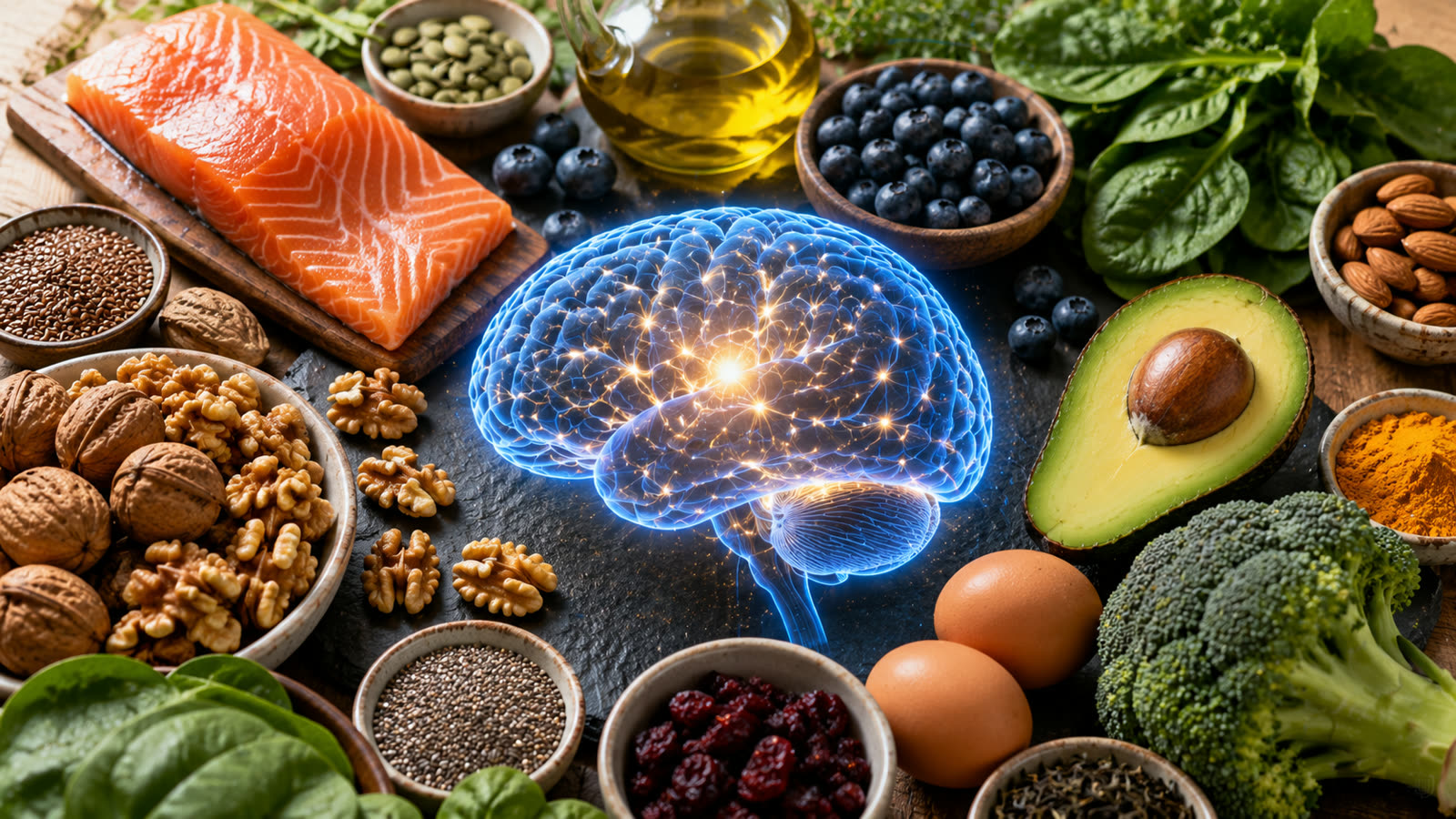
Nutrition and Cognitive Performance: How Food Shapes Your Brain
The complete neuroscience of eating for a sharper, more resilient brain — evidence-based nutrients, diets, and habits that support memory, focus, mood and lifelong cognition.
Part 1 — The Foundations of Brain Nutrition
Every second, your brain performs an astonishing number of tasks. It processes sensory information, retrieves memories, regulates emotions, plans future actions, and coordinates billions of electrical signals between neurons. Despite representing only about 2% of your body weight, the human brain consumes approximately 20% of your body's total energy at rest.
This enormous energy demand means that the quality of your nutrition directly influences how well your brain functions.
For decades, nutrition research focused primarily on preventing deficiencies and maintaining physical health. Today, neuroscience has revealed something much more fascinating: food is one of the most powerful environmental factors affecting cognitive performance. The nutrients you consume influence neurotransmitter production, neuroplasticity, inflammation, mitochondrial function, cerebral blood flow, and even the speed at which your brain ages.
Yet nutrition is also surrounded by misinformation. Every week seems to bring a new "superfood," miracle supplement, or revolutionary diet promising to boost intelligence overnight. While certain nutrients genuinely support brain health, there is no single food capable of transforming cognitive performance by itself.
Instead, the evidence consistently points toward an overall dietary pattern rich in whole, nutrient-dense foods.
In this comprehensive guide, we'll examine what modern neuroscience actually tells us about nutrition and the brain. You'll discover which nutrients matter most, which dietary patterns have the strongest scientific support, which foods may impair cognitive performance, and how to build an eating strategy that supports learning, focus, memory, and long-term brain health.
Whether you're a student preparing for exams, a professional seeking better concentration, or simply someone interested in maintaining cognitive function throughout life, understanding the relationship between nutrition and the brain is one of the smartest investments you can make.
Why Your Brain Needs High-Quality Nutrition
Unlike muscles, the brain stores very little energy.
Every moment of every day, it depends on a continuous supply of nutrients delivered through the bloodstream. Interruptions in this supply — even for relatively short periods — can affect attention, reaction time, memory, and decision-making.
The brain requires several categories of nutrients simultaneously:
- Glucose for energy
- Healthy fats to maintain neuronal membranes
- Amino acids to produce neurotransmitters
- Vitamins and minerals for thousands of biochemical reactions
- Water to maintain optimal cellular function
- Antioxidants to protect neurons from oxidative stress
When any of these become insufficient, the brain begins to prioritize survival over optimal performance.
This explains why poor dietary habits often produce symptoms such as:
- Brain fog
- Difficulty concentrating
- Mental fatigue
- Slower learning
- Reduced motivation
- Mood fluctuations
- Poor memory recall
Nutrition therefore acts as one of the fundamental pillars of cognitive performance alongside sleep, exercise, and continuous learning.
Building and Maintaining Brain Cells
Although most neurons remain with us for decades, they constantly repair themselves. Their membranes are continuously renewed, damaged proteins are replaced, and connections between neurons are strengthened or weakened according to experience.
These processes require omega-3 fatty acids, amino acids, vitamins, minerals and adequate energy. Without sufficient nutritional support, maintenance becomes less efficient, potentially affecting communication between neurons.
Modern neuroscience increasingly views brain health as a lifelong maintenance process rather than something that only becomes important in old age.
Nutrition Powers Neurotransmitters
Every thought you have depends on neurotransmitters — chemical messengers allowing neurons to communicate rapidly across complex neural networks. Some of the most important include:
| Neurotransmitter | Main Functions |
|---|---|
| Dopamine | Motivation, reward, learning, focus |
| Serotonin | Mood, emotional regulation, sleep |
| Acetylcholine | Memory, attention, learning |
| GABA | Relaxation and inhibition |
| Glutamate | Learning and synaptic plasticity |
Each neurotransmitter requires specific nutrients for its synthesis. For example:
- Tyrosine contributes to dopamine production.
- Tryptophan is required for serotonin synthesis.
- Choline is essential for acetylcholine production.
This does not mean that eating more of these nutrients automatically increases neurotransmitter levels. The brain tightly regulates their production. However, nutritional deficiencies can significantly impair these pathways.
Fighting Brain Inflammation
One of the biggest discoveries in neuroscience during the past two decades is the importance of chronic inflammation. Unlike the short-term inflammation that helps fight infections, chronic low-grade inflammation can silently damage brain tissue over many years.
Researchers have linked excessive neuroinflammation with cognitive decline, depression, Alzheimer's disease, Parkinson's disease, reduced learning capacity, and mental fatigue.
Diet plays a central role in regulating inflammation. Ultra-processed foods, excessive sugar intake, and diets rich in trans fats are generally associated with higher inflammatory markers. Conversely, diets rich in vegetables, fruits, legumes, fish, nuts, and olive oil consistently show anti-inflammatory effects.
Supporting Neuroplasticity
Your brain constantly rewires itself. This remarkable ability — known as neuroplasticity — allows us to acquire new skills, recover after injuries, and adapt to changing environments.
Nutrition cannot create neuroplasticity on its own. However, it provides the biological environment that allows plasticity to occur more efficiently. Research suggests healthy dietary patterns may support synapse formation, dendritic growth, Brain-Derived Neurotrophic Factor (BDNF), mitochondrial function and cellular energy production.
Combined with exercise, quality sleep, and deliberate practice, nutrition becomes one of the major contributors to lifelong learning. Read more in Neuroplasticity Explained.
The Brain's Three Main Energy Sources
Many people believe the brain simply "runs on sugar." The reality is far more interesting. Although glucose is normally the brain's preferred fuel, it is not the only one.
Glucose: The Brain's Primary Fuel
Under normal circumstances, the brain relies mainly on glucose. But this does not mean that eating more sugar improves brain performance. In fact, rapid spikes in blood glucose are often followed by equally rapid crashes that can reduce attention, mental energy, working memory and decision-making ability.
Instead of consuming large amounts of refined sugar, maintaining stable blood glucose through balanced meals generally provides more consistent cognitive performance. Whole grains, legumes, vegetables, fruits, and fiber-rich foods all contribute to more stable energy delivery.
Ketones: An Alternative Fuel
During prolonged fasting or ketogenic diets, the liver produces molecules called ketones. These can efficiently fuel the brain when glucose availability decreases. Researchers are actively investigating whether ketones may improve mitochondrial efficiency, reduce oxidative stress, and enhance energy production in aging brains.
Although ketogenic diets have shown promise in certain neurological conditions, current evidence does not support them as universally superior for healthy individuals.
Lactate: The Unexpected Brain Fuel
For many years, lactate was considered merely a waste product produced during exercise. Modern neuroscience has overturned this belief. Scientists now know that lactate produced by working muscles can be transported to the brain, where neurons use it as an additional energy source. This discovery may help explain why physical exercise consistently improves cognitive performance and learning capacity.
Essential Nutrients Every Brain Needs
Rather than searching for miracle "brain foods," neuroscience encourages us to focus on essential nutrients that support normal brain function.
Omega-3 Fatty Acids
Omega-3 fatty acids — particularly DHA — are among the most extensively studied nutrients in neuroscience. DHA forms a major structural component of neuronal membranes and contributes to efficient communication between brain cells.
Studies suggest that adequate omega-3 intake supports healthy cognitive aging, synaptic function, brain development and reduced inflammation.
Excellent food sources include salmon, sardines, mackerel, herring and trout. People who rarely consume oily fish may also consider algae- or fish oil-based supplements after consulting a healthcare professional.
Protein: The Raw Material of Thought
Proteins are often associated with muscles, but they are equally important for the brain. Their amino acids serve as the building blocks for neurotransmitters involved in attention, motivation, memory, and mood.
Good protein sources include fish, eggs, poultry, Greek yogurt, beans, lentils and tofu. Including a quality protein source at every meal helps maintain stable energy and supports normal neurotransmitter production.
Choline: The Memory Nutrient
Choline is essential for producing acetylcholine, one of the brain's most important neurotransmitters, playing a major role in learning, attention and memory formation.
Excellent dietary sources include eggs, liver, fish and soybeans. Although many people meet their needs through diet, surveys suggest that average choline intake is often lower than recommended levels.
Part 2 — The Mediterranean Diet: The Gold Standard for Brain Health
If there is one dietary pattern consistently supported by decades of research, it is the Mediterranean diet.
Rather than being a strict diet, it is a way of eating traditionally followed in countries such as Greece, southern Italy and parts of Spain. Its core principles include:
- Plenty of vegetables and fruits
- Whole grains
- Legumes
- Nuts and seeds
- Olive oil as the primary fat
- Regular consumption of fish
- Moderate dairy intake
- Limited red meat
- Very few ultra-processed foods
Numerous studies have associated adherence to the Mediterranean diet with better memory, slower cognitive decline, reduced risk of Alzheimer's disease, improved executive function, lower levels of systemic inflammation and better cardiovascular health, which directly benefits the brain.
One reason this diet performs so well is that it combines multiple brain-supportive nutrients rather than relying on a single "miracle food."
Why It Works
The Mediterranean diet provides healthy monounsaturated fats, omega-3 fatty acids, polyphenols, antioxidants, fiber, vitamins and minerals. Together, these nutrients help maintain healthy blood vessels, reduce oxidative stress and support efficient communication between neurons.
The MIND Diet: Specifically Designed for Brain Health
Researchers combined elements of the Mediterranean and DASH diets to create a nutrition plan specifically targeting cognitive decline. This became known as the MIND Diet (Mediterranean-DASH Intervention for Neurodegenerative Delay).
It emphasizes green leafy vegetables, other vegetables, berries, nuts, beans, whole grains, fish, poultry and olive oil — while limiting butter, cheese, fried foods, pastries and red meat.
Several long-term studies have found that people closely following the MIND diet tend to maintain better cognitive function as they age. Although no diet can completely prevent dementia, dietary patterns like the MIND diet appear to reduce risk when combined with exercise, quality sleep and cardiovascular health.
Vitamins That Support Brain Function
Vitamins participate in thousands of chemical reactions inside the nervous system. Rather than acting as cognitive enhancers, they help maintain normal brain function.
Vitamin B Complex
B vitamins play major roles in energy metabolism, DNA repair, neurotransmitter synthesis and myelin maintenance. The most important include B1 (Thiamine), B6 (Pyridoxine), B9 (Folate) and B12 (Cobalamin).
Deficiencies — particularly vitamin B12 — may contribute to fatigue, memory problems, confusion and mood disturbances. Older adults and strict vegans should pay particular attention to B12 intake.
Vitamin D
Although often associated with bone health, vitamin D receptors are found throughout the brain. Researchers continue investigating its role in mood regulation, cognitive aging, immune function and neuroprotection.
Maintaining adequate vitamin D levels appears beneficial for overall health, although supplementation should be guided by healthcare professionals when deficiency exists.
Vitamin E
Vitamin E functions primarily as an antioxidant. By protecting neuronal membranes from oxidative stress, it may contribute to healthy brain aging. Good food sources include almonds, sunflower seeds, hazelnuts and avocados.
Minerals Your Brain Depends On
The brain also relies on numerous minerals to function efficiently.
Magnesium
Magnesium participates in over 300 biochemical reactions. Within the nervous system it supports synaptic plasticity, sleep quality, muscle relaxation and normal nerve signaling. Food sources include pumpkin seeds, almonds, dark leafy greens, beans and whole grains.
Iron
Iron enables oxygen transport throughout the body. Without sufficient oxygen delivery, neurons cannot produce energy efficiently. Iron deficiency may contribute to poor concentration, fatigue and reduced learning capacity. Excellent dietary sources include lean red meat, lentils, spinach and beans.
Zinc
Zinc contributes to synaptic communication, learning, immune health and memory formation. Rich dietary sources include seafood, beef, pumpkin seeds and legumes.
Antioxidants: Protecting the Brain from Oxidative Stress
Every day, normal metabolism produces unstable molecules called free radicals. When these accumulate faster than the body can neutralize them, oxidative stress develops. Because the brain consumes enormous amounts of oxygen, it is particularly vulnerable to oxidative damage.
Antioxidants help reduce this damage. Excellent antioxidant-rich foods include blueberries, strawberries, blackberries, dark chocolate, green tea and colorful vegetables. Rather than relying on supplements, scientists generally recommend obtaining antioxidants through whole foods.
Polyphenols: Nature's Brain-Protective Compounds
Polyphenols are natural plant compounds that may benefit brain health through several mechanisms. Current research suggests they may reduce inflammation, improve cerebral blood flow, support neuroplasticity and protect neurons from oxidative damage.
Excellent sources include blueberries, grapes, cocoa, green tea, coffee and olive oil. Although research remains ongoing, populations consuming polyphenol-rich diets generally experience healthier aging.
The Gut-Brain Axis
One of the fastest-growing fields in neuroscience is the study of the gut-brain axis. Your digestive tract contains trillions of microorganisms collectively known as the gut microbiome. These microorganisms influence immune function, inflammation, neurotransmitter production, mood and stress responses.
Communication occurs in both directions through the vagus nerve, hormones, immune signaling and microbial metabolites. Although much remains to be discovered, maintaining a diverse gut microbiome appears beneficial for overall brain health.
Feeding Your Microbiome
Foods that support beneficial gut bacteria include yogurt, kefir, sauerkraut, kimchi, legumes, oats, fruits and vegetables. Dietary fiber acts as fuel for many beneficial bacterial species.
Hydration: The Forgotten Cognitive Enhancer
Even mild dehydration can impair mental performance. Research has shown that losing as little as 1–2% of body weight through dehydration may negatively affect attention, working memory, mood, reaction time and executive function.
Because the brain is approximately 75% water, adequate hydration is essential for optimal neuronal communication.
Practical recommendations: drink water consistently throughout the day, increase intake during exercise or hot weather, and monitor thirst and urine color as rough indicators of hydration. While coffee and tea contribute to fluid intake, plain water should remain the primary source of hydration.
Part 3 — Coffee: Friend or Foe?
Coffee is one of the most studied beverages in nutritional neuroscience. Its primary active ingredient, caffeine, blocks adenosine receptors in the brain. Adenosine is a neurotransmitter that gradually builds up throughout the day and contributes to feelings of sleepiness.
By temporarily blocking adenosine, caffeine can improve alertness, attention, reaction time, vigilance and mental energy. For many people, moderate coffee consumption is associated with improved cognitive performance and may even contribute to healthy brain aging.
However, more is not always better. Excessive caffeine intake may lead to anxiety, restlessness, elevated heart rate, reduced sleep quality and difficulty concentrating once the initial stimulation wears off. Sleep deprivation caused by excessive caffeine often negates any short-term cognitive benefits.
How Much Coffee Is Too Much?
For most healthy adults, up to 400 mg of caffeine per day (roughly three to four cups of coffee) is generally considered safe. Individual tolerance varies considerably. Some people metabolize caffeine rapidly, while others remain sensitive for many hours.
Avoid consuming caffeine late in the afternoon or evening if it interferes with your sleep. Remember: good sleep remains a far more powerful cognitive enhancer than any cup of coffee.
Tea: Calm Focus
Unlike coffee, tea contains both caffeine and L-theanine, an amino acid naturally found in tea leaves. L-theanine appears to promote relaxation without causing drowsiness.
Research suggests that the combination of caffeine and L-theanine may improve sustained attention, working memory, mental flexibility and task switching. Green tea is particularly rich in polyphenols, including EGCG (epigallocatechin gallate), which has attracted significant research interest for its potential neuroprotective properties.
Dark Chocolate
Good news for chocolate lovers: high-quality dark chocolate contains flavonoids — plant compounds associated with improved blood flow and antioxidant activity. Studies suggest cocoa flavonoids may temporarily improve attention, processing speed and executive function.
However, these benefits primarily apply to dark chocolate containing at least 70% cocoa, not highly processed milk chocolate loaded with sugar. Moderation remains essential.
Should You Take Brain Supplements?
The supplement industry generates billions of dollars every year by promising improved memory, focus, and intelligence. Scientific evidence is considerably more nuanced.
For healthy individuals consuming a balanced diet, many popular "brain supplements" show limited evidence of substantial cognitive benefits. Some supplements may be beneficial in specific circumstances, including:
- Omega-3 (for individuals with low fish intake)
- Vitamin B12 (for deficiency)
- Vitamin D (when deficient)
- Iron (when deficiency is diagnosed)
Supplements should complement — not replace — a healthy dietary pattern.
Intermittent Fasting and Brain Health
Intermittent fasting has gained considerable attention in recent years. During fasting periods, the body gradually shifts toward using ketones as an alternative energy source.
Animal studies suggest fasting may stimulate autophagy (cellular cleanup), neuroplasticity, mitochondrial efficiency and BDNF production. Human research remains promising but less conclusive.
Intermittent fasting is not necessary for optimal cognitive performance and is not appropriate for everyone. Individuals with diabetes, eating disorders, pregnancy, or certain medical conditions should seek professional advice before attempting fasting protocols.
Foods That May Harm Cognitive Performance
Improving brain health isn't only about eating beneficial foods. Reducing harmful dietary habits is equally important.
Ultra-Processed Foods
Ultra-processed foods often contain combinations of refined starches, added sugars, excess salt, industrial oils and artificial additives. High consumption has been associated with increased inflammation, obesity, cardiovascular disease and poorer cognitive aging.
Replacing processed snacks with whole foods is one of the simplest ways to improve overall nutritional quality.
Added Sugar
Glucose is essential. Added sugar is not. Frequent large sugar spikes may contribute to energy crashes, reduced attention, increased inflammation and weight gain.
Instead of eliminating carbohydrates, prioritize whole grains, fruits, legumes and vegetables. These foods provide slower, more stable energy for the brain.
Alcohol
Small amounts of alcohol are unlikely to cause lasting cognitive impairment in healthy adults. However, chronic excessive alcohol consumption can damage memory, executive function, sleep quality and brain structure. Reducing alcohol intake remains one of the most effective strategies for preserving long-term cognitive health.
Common Brain Nutrition Myths
Modern nutrition is full of myths that sound convincing but lack scientific support. Let's separate fact from fiction.
Forget "brain superfoods." Build super habits instead.
Your brain benefits far more from healthy nutrition practiced consistently for decades than from occasional bursts of perfect eating.
A Simple Daily Brain Nutrition Plan
Putting neuroscience into practice doesn't require complicated diets. A brain-friendly day could look like this:
Breakfast
- Greek yogurt
- Blueberries
- Walnuts
- Oats
Lunch
- Grilled salmon
- Mixed vegetables
- Brown rice
- Olive oil dressing
Snack
- Apple
- Almonds
Dinner
- Lentil soup
- Whole-grain bread
- Salad
- Olive oil
Drinks
- Water throughout the day
- Coffee or green tea in moderation
Simple habits, repeated consistently, generally outperform complicated nutrition plans that are difficult to maintain.
Key Takeaways
Nutrition is one of the most powerful lifestyle factors influencing cognitive performance. Current evidence strongly supports:
- ✅ Eating mostly whole foods
- ✅ Following Mediterranean or MIND dietary patterns
- ✅ Consuming sufficient omega-3 fatty acids
- ✅ Eating plenty of colorful fruits and vegetables
- ✅ Staying hydrated
- ✅ Limiting ultra-processed foods
- ✅ Maintaining healthy sleep and regular exercise alongside proper nutrition
Continue Your Brain Optimization Journey
Nutrition works best when combined with other evidence-based habits. Continue exploring Brain Geek:
- The Complete Guide to the Human Brain
- The Complete Guide to Dopamine
- Exercise and Cognitive Performance
- The Complete Guide to Focus
- The Complete Guide to Memory
- The Science of Deliberate Practice
- Neuroplasticity Explained
Don't forget to try our free tools: Brain Health Score, Brain Age Calculator, Cognitive Profile, Chronotype Assessment.
Frequently Asked Questions
What is the best diet for brain health?
Current evidence most strongly supports the Mediterranean diet and the MIND diet, both of which emphasize vegetables, fruits, whole grains, fish, olive oil, nuts and legumes.
Does sugar improve brain performance?
Your brain requires glucose, but consuming large amounts of added sugar does not improve cognition. Stable blood sugar supports better focus and mental energy.
Are supplements necessary?
Most healthy people can obtain the nutrients they need through a balanced diet. Supplements may be helpful when specific deficiencies exist or dietary intake is inadequate.
Is coffee good for the brain?
Moderate coffee consumption may improve alertness, attention and reaction time. Excessive intake, however, can impair sleep and increase anxiety.
Which foods are best for memory?
Evidence supports regularly consuming fatty fish, blueberries, leafy green vegetables, eggs, nuts, olive oil, whole grains and legumes. These foods contribute to overall brain health as part of a balanced dietary pattern.