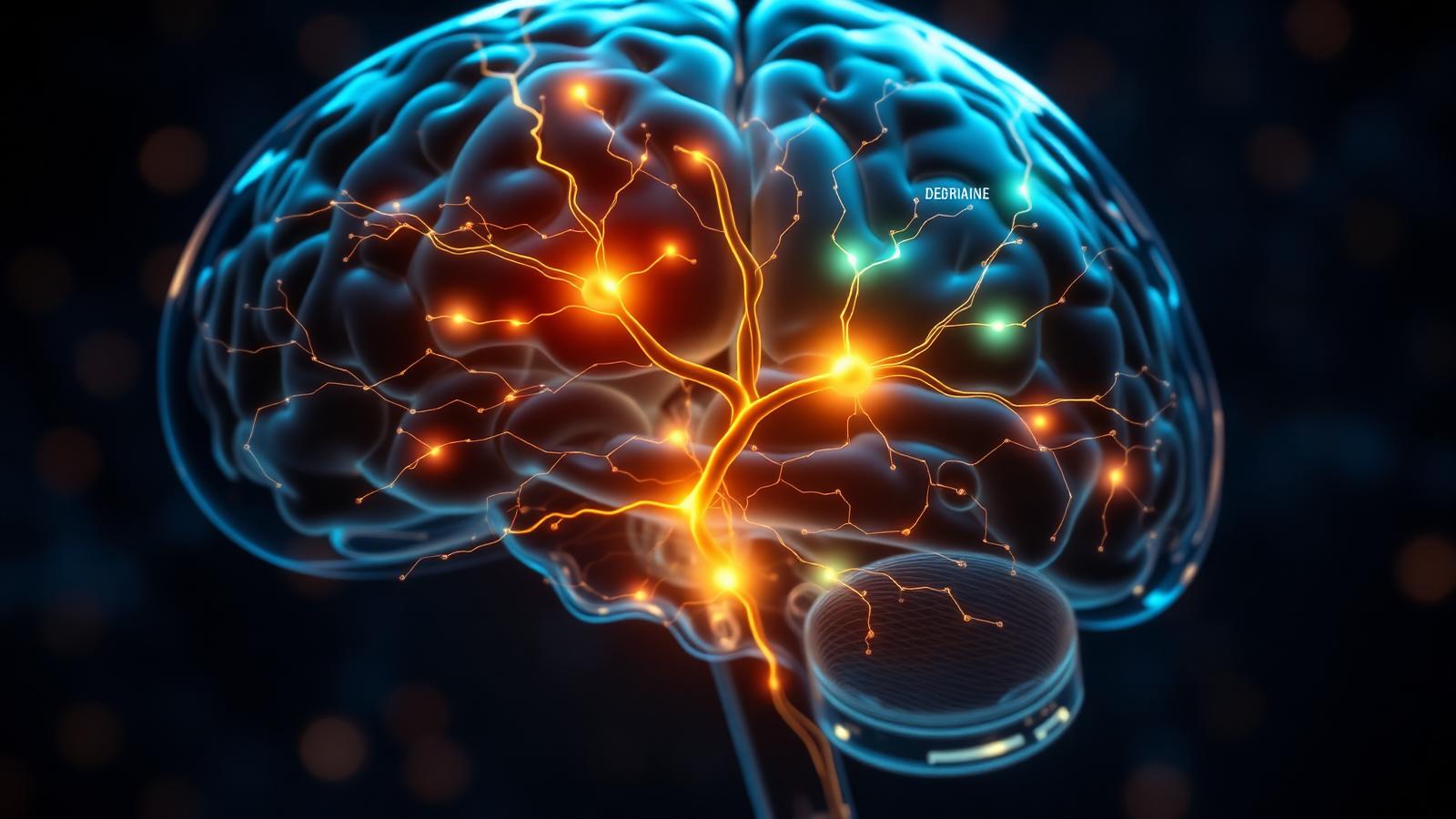
The Four Major Neurotransmitters: Dopamine, Serotonin, GABA, and Glutamate Explained
A clear, evidence-based introduction to the four chemical messengers most people should understand — what they really do, the myths worth forgetting, and how they shape motivation, mood, learning and behavior.
Every thought you have, every memory you retrieve, every decision you make, every muscle you move and every emotion you feel depends on an extraordinarily complex electrochemical conversation between billions of neurons.
Neurons don't touch each other. They communicate across tiny gaps called synapses using small chemical messengers known as neurotransmitters. Understanding these molecules is one of the most powerful ways to understand yourself — how you learn, why you feel motivated or flat, why you sleep well or badly, how habits form, and how your brain balances excitement and calm.
The human brain uses dozens of neurotransmitters and neuromodulators, including acetylcholine, norepinephrine, endorphins, endocannabinoids, oxytocin and many others. This guide focuses on the four that offer the clearest, most useful introduction to how the brain actually works: dopamine, serotonin, GABA and glutamate. Together they cover motivation, mood regulation, inhibition, excitation, learning and memory — the essential vocabulary of modern neuroscience.
They are not the only important messengers, and we will avoid the common trap of turning each one into a single-word cartoon (dopamine = pleasure, serotonin = happiness). The reality is more interesting — and far more useful. For the broader map, start with 👉The Complete Guide to the Human Brain.
What Is a Neurotransmitter?
A neurotransmitter is a small molecule a neuron uses to send a signal to another cell — usually another neuron, sometimes a muscle or gland. The basic sequence looks like this:
- An electrical signal (an action potential) travels down the sending neuron.
- At the end of the neuron, tiny vesicles release neurotransmitter molecules into the synaptic cleft — the microscopic gap between the two cells.
- Those molecules diffuse across the gap and bind to receptors on the receiving neuron.
- Depending on the receptor, the receiving neuron becomes more or less likely to fire its own signal.
- The neurotransmitter is then rapidly cleared — broken down by enzymes, reabsorbed by the sending neuron, or recycled — so the signal remains precise in time.
The effect a neurotransmitter has is not fixed. It depends on:
- Receptor type. The same molecule can excite one cell and inhibit another simply because they express different receptors.
- Brain region. Dopamine in the striatum shapes movement and habit; dopamine in the prefrontal cortex shapes working memory and focus.
- Circuit context. Neurotransmitters act inside networks. Their meaning depends on what other cells are doing at the same moment.
- Concentration and timing. Brief phasic bursts and slow tonic changes convey very different information.
- Interactions with other systems. Dopamine, serotonin, GABA and glutamate constantly modulate one another.
This is the first mental model to internalize: one neurotransmitter does not equal one emotion or one behavior. Anyone who tells you otherwise is selling a simplification.
Dopamine — Motivation, Learning and Reward Prediction
Dopamine is probably the most famous — and the most misunderstood — molecule in the brain. It is routinely branded as "the pleasure chemical," blamed for every modern addiction, and promised as the shortcut to focus and productivity. The scientific picture is more nuanced.
Dopamine is best understood as a precision signal for motivation, reinforcement learning and movement. Its dominant role is to help the brain decide what is worth pursuing and to update those decisions based on what actually happens.
Reward prediction error
The single most important discovery about dopamine in the past forty years is that dopamine neurons don't fire when a reward arrives. They fire when a reward is better than expected. If the outcome exactly matches your prediction, dopamine barely moves. If it exceeds your prediction, dopamine spikes and the brain updates: "this is worth doing again." If it falls short, dopamine dips and the brain updates in the opposite direction.
This reward prediction error is the mathematical engine behind learning, habit formation and goal pursuit. It is why novelty feels motivating, why constant on-demand stimulation eventually flattens motivation, and why long-term goals need visible progress markers to stay engaging.
Where dopamine works
- Motivation and effort. Willingness to invest work for delayed rewards.
- Reinforcement learning. Updating which behaviors are worth repeating.
- Movement. Voluntary motor control (its degeneration in one pathway causes Parkinson's disease).
- Attention and working memory. Sustaining a goal in mind and filtering distractions.
- Habit formation. Automating action sequences that reliably produce rewards.
For a full deep-dive, read 👉The Complete Guide to Dopamine and the beginner-friendly companion, 👉Dopamine Explained. To see how dopamine intersects with attention, distraction and deep work, see 👉The Complete Guide to Focus and 👉The Hidden Cost of Multitasking.
Serotonin — Regulation, Flexibility and Stability
If dopamine is about pursuit, serotonin is about regulation. It is one of the oldest neurotransmitter systems in evolution and it influences an unusually broad range of functions — which is precisely why calling it "the happiness chemical" is misleading.
What serotonin actually does
- Mood regulation. Serotonin is one of many contributors to how mood is stabilized over time — but low serotonin alone does not cause depression, and boosting it alone does not create happiness.
- Behavioral flexibility and patience. Serotonin helps the brain wait for delayed rewards, tolerate uncertainty and adjust behavior when circumstances change.
- Impulse control. It supports the ability to inhibit rash responses.
- Sleep–wake regulation. Serotonin is the biochemical precursor of melatonin and is deeply involved in the timing of sleep.
- Appetite and satiety. It contributes to signals of fullness and food intake regulation.
- Social behavior and emotional processing. Serotonin modulates how the brain interprets social cues and emotional stimuli.
Serotonin acts through at least fourteen distinct receptor subtypes distributed across many brain regions, which is why the same molecule can produce very different effects depending on where it is released. This is a rare case where "it depends" is not a cop-out — it is the actual biology.
The gut serotonin misunderstanding
You have almost certainly read that "about 90% of serotonin is in the gut." This is true, but it is often misinterpreted. Peripheral serotonin (in the gastrointestinal system, blood platelets, and elsewhere) and brain serotonin are largely separated by the blood–brain barrier and function as distinct pools. Digestive serotonin does not simply flow up to your brain and change your mood. Gut and brain do influence each other, but through more indirect pathways — see 👉Nutrition and Cognitive Performance.
GABA — The Brain's Major Inhibitory Signal
GABA (gamma-aminobutyric acid) is the principal inhibitory neurotransmitter in the adult brain. Roughly speaking, when GABA binds to its receptors, the receiving neuron becomes less likely to fire.
Inhibition sounds negative, as if the brain is being turned off. It is the opposite. Inhibition is what makes complex thought possible. Without it, neural activity would spread uncontrollably — the biological equivalent of every instrument in an orchestra playing at maximum volume at once. A useful analogy is that GABA works less like a mute button and more like a set of intelligent traffic lights, deciding which signals get through and when. The analogy is imperfect — real inhibitory networks are far richer — but it captures the idea.
Where GABA matters
- Neural excitability. Preventing runaway firing and stabilizing networks.
- Signal selection. Filtering irrelevant activity so meaningful patterns stand out.
- Sleep. GABAergic circuits play a major role in initiating and maintaining sleep, especially non-REM sleep. See 👉The Complete Guide to Sleep.
- Anxiety regulation. Many anti-anxiety medications work by enhancing GABA signaling, which reflects — but does not fully explain — its role in calming neural circuits.
- Attention and cognitive control. Inhibitory circuits help sustain focus and suppress distractions.
Glutamate — Learning, Memory and Excitation
Glutamate is the brain's principal excitatory neurotransmitter. When glutamate binds to its receptors on the receiving neuron, that neuron becomes more likely to fire. It is by far the most abundant neurotransmitter in the central nervous system, and almost every fast excitatory signal in the cortex is a glutamate signal.
Glutamate and learning
Glutamate is the molecular workhorse of learning and memory. Its most famous receptors — AMPA and NMDA — mediate long-term potentiation (LTP), the process by which synapses become durably stronger after repeated coordinated activity. LTP is one of the best-studied cellular mechanisms of memory formation and skill acquisition.
In simple terms: when two neurons fire together often enough, glutamatergic signaling helps rewire their connection so they will fire together more reliably in the future. This is the biology beneath the famous shorthand "neurons that fire together, wire together." For a deeper look at how the brain uses this to change itself throughout life, see 👉Neuroplasticity Explained. To translate it into learning strategies, see 👉The Complete Guide to Memory, 👉The Complete Guide to Spaced Repetition, 👉The Science of Deliberate Practice and 👉Why We Forget and How to Remember More.
Excitation must be controlled
Because glutamate is so powerful, its release is carefully regulated. When regulation fails — for example, after severe brain injury or stroke — excessive glutamate release can push neurons into a state called excitotoxicity, where sustained overactivation damages or kills cells. This is a specific pathological process, not a reason to be afraid of glutamate in everyday life. A healthy brain is a glutamatergic brain.
The Brain Works Through Balance, Not Isolated Chemicals
If you take only one idea from this article, take this one: cognitive performance and emotional wellbeing do not come from having "more" of any single neurotransmitter. They come from a brain that can regulate complex signaling systems in a context-appropriate way.
- GABA and glutamate maintain the delicate excitation–inhibition balance that lets networks compute without collapsing.
- Dopamine shapes which signals get amplified as worth pursuing.
- Serotonin stabilizes behavior over time and supports flexibility when circumstances change.
- Modulators like acetylcholine and norepinephrine adjust arousal, attention and plasticity across all of these systems.
A better brain is not a brain flooded with dopamine, or serotonin, or glutamate. It is a brain that can raise and lower each of these signals at the right time, in the right region, for the right duration. This is why simplistic "boost neurotransmitter X" advice — whether from a supplement label or a social feed — is usually misleading.
The Four Major Neurotransmitters at a Glance
| Neurotransmitter | Broad Role | Important Functions | Common Oversimplification | Better Way to Think About It |
|---|---|---|---|---|
| Dopamine | Motivation & learning signal | Reward prediction, effort, movement, working memory, habits | "The pleasure chemical." | A precision signal for what is worth pursuing and how to update from outcomes. |
| Serotonin | Regulation & stability | Mood regulation, patience, sleep–wake, appetite, social behavior, flexibility | "The happiness chemical." | A broad regulator that helps the brain adapt behavior to changing circumstances. |
| GABA | Inhibition | Network stability, signal filtering, sleep, cognitive control, calm | "A relaxation switch." | Precision inhibition that lets meaningful signals emerge from noise. |
| Glutamate | Excitation | Fast excitatory signaling, learning, memory, long-term potentiation | "The opposite of GABA — dangerous." | The primary carrier of information in the cortex, tightly regulated to enable learning. |
Infographic: The Four Major Neurotransmitters
A single-page visual summary of what each of these four messengers does — designed to make the mental model easy to remember, without pretending these are the only functions of each system.
Can You Naturally Support Healthy Neurotransmitter Function?
You cannot precisely "hack" individual neurotransmitters with clever tricks. What you can do is provide the conditions under which every one of these systems tends to function well. The evidence for this is unglamorous, boring, and extremely strong.
- Move regularly. Aerobic and resistance exercise support dopamine, serotonin and glutamatergic plasticity, and increase BDNF — a protein that helps neurons grow and adapt. See 👉Exercise and Cognitive Performance.
- Sleep enough, and consistently. Sleep restores receptor sensitivity, consolidates memory, regulates mood-related circuits and rebalances GABA and glutamate. See 👉The Complete Guide to Sleep.
- Eat a balanced diet with adequate protein and micronutrients. Neurotransmitters are built from amino acids and depend on cofactors such as B vitamins, iron and zinc. See 👉Nutrition and Cognitive Performance.
- Regulate stress. Chronic stress dysregulates the HPA axis, alters serotonin and dopamine signaling, and shifts the excitation–inhibition balance.
- Learn hard things on purpose. Genuine cognitive challenge drives glutamatergic plasticity. See 👉Neuroplasticity Explained and 👉How to Build Cognitive Reserve.
- Stay socially connected. Meaningful social interaction shapes reward, regulation and stress systems in ways no supplement approaches.
- Get morning light and keep a stable circadian rhythm. Circadian regulation influences virtually every neurotransmitter system.
Four Neurotransmitter Myths Worth Forgetting
For a broader tour of the neuromyths that dominate the internet, read 👉The Biggest Neuroscience Myths. For how flawed narratives shape decisions in general, see 👉Why Humans Make Irrational Decisions.
Beyond the Big Four
These four systems are the essential vocabulary, not the complete dictionary. Several other messengers deserve at least a mention:
- Acetylcholine — critical for attention, arousal, learning and memory. Involved in the muscarinic and nicotinic systems targeted by many drugs.
- Norepinephrine (noradrenaline) — regulates alertness, vigilance and the stress response.
- Endorphins and enkephalins — opioid peptides central to pain modulation and pleasure.
- Endocannabinoids — modulate stress, appetite, mood and synaptic plasticity.
- Oxytocin and vasopressin — peptides deeply involved in social bonding and physiological regulation.
- Histamine — supports wakefulness and arousal.
A comprehensive picture of brain function requires all of them working together. The "big four" simply give you the clearest map to start with.
Brain Geek Tools to Explore
These free tools help you explore the systems these neurotransmitters influence:
Recommended Books and Tools for Understanding the Brain
If you want to go further, these are the books we recommend most often to readers exploring neurotransmitters, motivation, learning and behavior.
- The Molecule of More — Daniel Z. Lieberman & Michael E. Long
The most readable popular-science introduction to dopamine, motivation and future-oriented thinking.
- Behave — Robert Sapolsky
A masterclass on the biology of human behavior — neurotransmitters, hormones, brain circuits and everything in between.
- The Brain That Changes Itself — Norman Doidge
An accessible introduction to neuroplasticity — essential context for understanding glutamate, learning and lifelong brain change.
- Dopamine Nation — Dr. Anna Lembke
A clinical and personal exploration of pleasure, pain and reward balance in a hyper-stimulated world.
- Why We Sleep — Matthew Walker
Sleep is one of the most powerful regulators of every major neurotransmitter system in the brain.
- Spark — Dr. John J. Ratey
How exercise shapes dopamine, serotonin, glutamate, BDNF and cognitive performance.
Disclosure: As an Amazon Associate, Brain Geek may earn from qualifying purchases at no additional cost to you.
Frequently Asked Questions
What are the four major neurotransmitters?
Dopamine, serotonin, GABA and glutamate are commonly grouped as the four most educationally important neurotransmitters. They cover motivation and learning (dopamine), regulation and stability (serotonin), inhibition (GABA) and excitation (glutamate). The brain uses many other neurotransmitters as well.
What is the difference between excitatory and inhibitory neurotransmitters?
An excitatory neurotransmitter, like glutamate, increases the likelihood that the receiving neuron will fire. An inhibitory one, like GABA, decreases it. The balance between excitation and inhibition is fundamental to stable brain function.
Is dopamine really about pleasure?
Not primarily. Dopamine mainly encodes motivation and reward prediction errors — the gap between what was expected and what actually happened. Pleasure itself involves other systems, including opioids and endocannabinoids.
Does serotonin control happiness?
No. Serotonin is a broad regulator that influences mood, sleep, appetite, behavioral flexibility and social behavior. It is one contributor to emotional wellbeing among many, not a happiness switch.
Can I boost my neurotransmitters with supplements?
Effects are usually modest and short-lived, and reliable results are hard to demonstrate for healthy people. Sleep, movement, nutrition, stress regulation, meaningful goals and cognitive challenge influence neurotransmitter systems more reliably than any pill. Speak to a qualified clinician before starting any supplement or medication.
Sources & Further Reading
- Kandel, E. R., Schwartz, J. H., et al. Principles of Neural Science (McGraw-Hill).
- Purves, D., et al. Neuroscience (Oxford University Press / Sinauer).
- Schultz, W. Predictive reward signal of dopamine neurons. Journal of Neurophysiology.
- Berridge, K. C., & Robinson, T. E. Parsing reward. Trends in Neurosciences.
- National Institute of Neurological Disorders and Stroke (NIH): overviews of neurotransmission and major neurotransmitter systems.
- National Institute of Mental Health (NIH): resources on brain function and mental health research.
Key Takeaways
- Neurotransmitters are the chemical messengers neurons use to communicate across synapses.
- Dopamine, serotonin, GABA and glutamate cover motivation, regulation, inhibition and excitation — a robust mental model for how the brain works.
- Effects depend on receptors, brain regions, circuits, timing and interactions with other systems.
- Cognitive performance emerges from balance and regulation, not from maximizing any single molecule.
- The most reliable way to support healthy neurotransmitter function is unglamorous: sleep, movement, nutrition, stress regulation, learning and social connection.
Your brain is not a chemical dashboard with four dials. It is a dynamic living network — and understanding these four messengers is one of the best starting points for understanding yourself.